Long Covid, with its constellation of symptoms, is proving a challenging moving target for researchers trying to conduct large studies of the syndrome. As they take aim, they’re debating how to responsibly use growing piles of real-world data — drawing from the full experiences of long Covid patients, not just their participation in stewarded clinical trials.
Superwise is a monitoring platform that provides model observability for high-scale machine learning (ML) operations. Superwise provides teams with out-of-the-box (OOTB) metrics on their models’ production behavior, so they can effectively address drift, data quality issues, and other problems before they negatively impact business.
A team of data scientists from the University of Pittsburgh School of Medicine in the US, and neurotrauma surgeons from the University of Pittsburgh Medical Centre, has developed the first automated brain scans and machine-learning techniques to inform outcomes for patients who have severe traumatic brain injuries. The advanced machine-learning algorithm can analyse vast volumes of data from brain scans and relevant clinical data from patients.
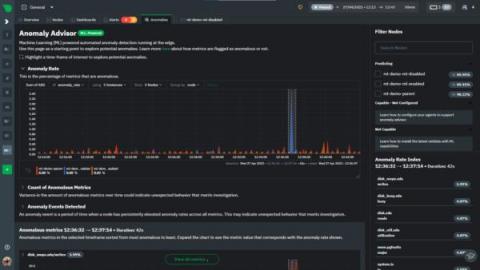
Our Analytics & ML lead Andrew Maguire recently had a chance to share our new Anomaly Advisor feature with the wider CNCF community. In his demonstration he did some light chaos engineering (using Gremlin and stress-ng) to generate some real anomalies on his infrastructure and watch how it all played out in the Anomaly Advisor in Netdata Cloud. There were also some great questions and discussion from the audience around ML in general and in the observability space itself.
A new study shows that it is possible to use the genetic sequences of a person’s antibodies to predict what pathogens those antibodies will target. Reported in the journal Immunity, the new approach successfully differentiates between antibodies against influenza and those attacking SARS-CoV-2, the virus that causes COVID-19.
There has been a lot of coverage of machine learning (ML) for biological research, for radiology, and for other uses where the direct users are academics, researchers, and medical professionals. However, there is an opportunity for some biological information to be useful in the retail industry. One area is in skincare.
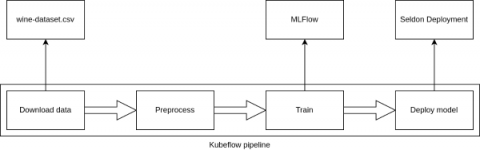
MLOps pipelines are a set of steps that automate the process of creating and maintaining AI/ML models. In other words, Data Scientists create multiple notebooks while building their experiments, and naturally the next step is a transition from experiments to production-ready code. The best way to do this is to build an effective MLOps pipeline. What’s the alternative, I hear you ask? Well, each time you want to create a model, you run your notebooks manually.