Operations | Monitoring | ITSM | DevOps | Cloud

Telemetry Talks ep 7 - Beyond OpenTelemetry with anomaly detection

In this episode, we continue to dive into the workshop we hosted at Cloud Native Days Romania in May, together with our guest, Fred Navruzov, correlating OpenTelemetry with anomaly detection. Furthermore we explore how the VictoriaMetrics MCP server and skills bring AI-powered observability to your workflows. Learn how to detect anomalies faster and interact with your metrics, logs and traces using natural language.

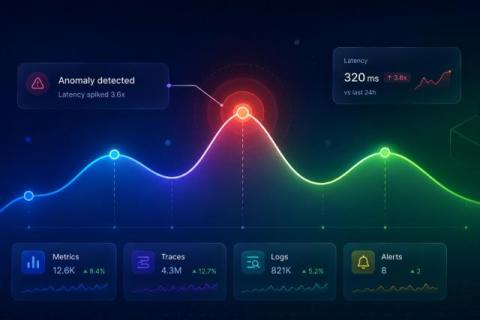
Anomaly Detection Is Now Generally Available

You set a threshold alert on a checkout endpoint at 500ms. It pages you every Monday at 9am, when traffic doubles and nothing is actually wrong. You raise the threshold to 800ms to make the noise stop. Three weeks later a real regression creeps in at 650ms, and nobody gets paged, because you tuned the alert to survive Mondays instead of to catch problems.

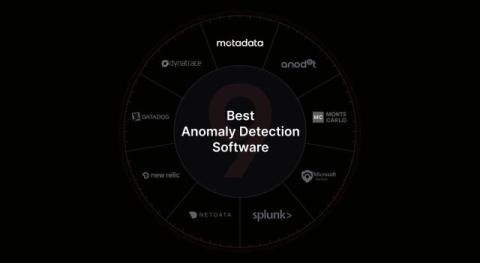
Best Anomaly Detection Software: 9 Tools Compared on Cost and Coverage

Does the anomaly you need to catch show up in infrastructure, in security logs, in a data pipeline, or in a revenue figure? If you already know the answer, you probably learned it from an incident. A service degraded quietly, nobody got paged, and the post-mortem showed the signal had been in the data for hours. The thresholds were set correctly, and they still could not separate a busy Tuesday from a failure.

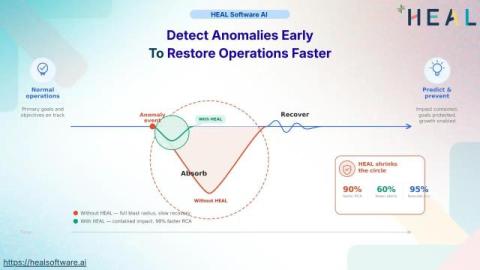
Measuring Digital Marketing Performance Like an Ops Team

When your marketing teams start thinking like an Ops team, you can change how you manage campaigns. Instead of just reacting to things, they can use data to make smart choices, keeping things stable and aiming for the best results. This approach means we don't just launch campaigns and hope for the best. Instead, we constantly check their vital signs, catch problems early, and fix them in an organised way. The payoff? We spend money more effectively, get more conversions, and build a marketing system that delivers predictable results.


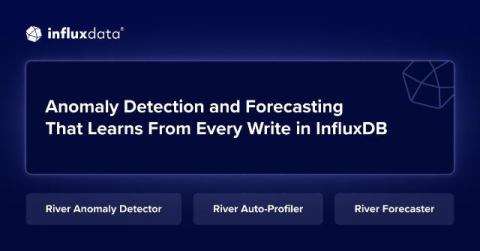
Anomaly Detection and Forecasting That Learns From Every Write in InfluxDB

For many operational time series workloads, machine learning can’t operate in the historical way, where data is compiled once and models are trained offline. Sensor readings, infrastructure metrics, application telemetry, energy data, industrial measurements, and financial ticks all share a basic property: the next datapoint is more useful when the system can respond to it immediately (or at least close to immediately).

AI Anomaly Detection: Catch AI Cost Surprises Before They Kill Margins

Consider this: traditional cloud cost monitoring was like checking your fuel gauge once a month — after the trip was already over. That model worked when infrastructure scaled slowly. You provisioned resources predictably and paid for stable, linear usage. AI breaks that model. Today, AI costs behave like a high-performance engine with a hypersensitive throttle. A small input, like a prompt change or a single power user, can dramatically increase your fuel burn in seconds.

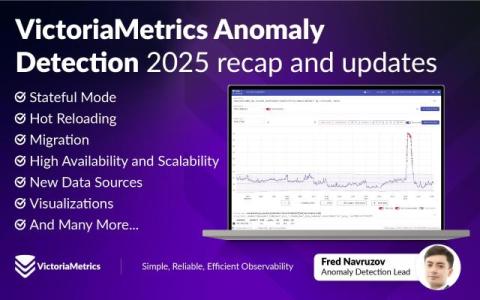
VictoriaMetrics Anomaly Detection: 2025 Roadmap & Features (vmanomaly)

Discover the latest advancements in AI-driven monitoring with VictoriaMetrics. Fred Navruzov, Lead of the Anomaly Detection team, presents a comprehensive year-in-review for vmanomaly (part of the VictoriaMetrics Enterprise suite). This session dives into how we are making machine learning more accessible for SREs through new interactive tools and protocol integrations. Key Highlights: 2025 Recap: A look back at the major releases and improvements in vmanomaly. Interactive Playgrounds: A demo of our new environment for testing anomaly detection models before deployment. MCP Server Integration.