Operations | Monitoring | ITSM | DevOps | Cloud

The latest News and Information on Log Management, Log Analytics and related technologies.

Introducing the Splunk App for Behavioral Profiling

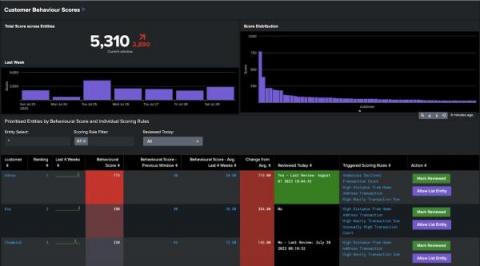
Splunk is the platform for a million use cases, used to investigate operational data across security, observability, fraud, business intelligence and many other domains. But, in my time at Splunk, I’ve come to realize that all of our customers face challenges that stem from the same core problem: Within exploding data volumes, finding the anomalously behaving entities that are most threatening to the resilience of their organization.


What Is AI Monitoring and Why Is It Important

Artificial intelligence (AI) has emerged as a transformative force, empowering businesses and software engineers to scale and push the boundaries of what was once thought impossible. However as AI is accepted in more professional spaces, the complexity of managing AI systems seems to grow. Monitoring AI usage has become a critical practice for organizations to ensure optimal performance, resource efficiency, and provide a seamless user experience.

Unveiling Splunk UBA 5.3: Power and Precision in One Package

In the face of an ever-evolving cybersecurity landscape, Splunk never rests. Today, we're ecstatic to share the release of Splunk User Behavior Analytics (UBA) 5.3, delivering power and precision in one package, and pushing the boundaries of what's possible in user and entity behavior analytics.

Getting _____________ for Less from Your Analytics Tools

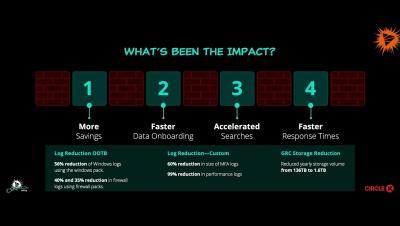
Your analytics system of choice is probably pulling triple-duty for your enterprise–data collection, data storage, and its primary goal: analytics for monitoring, reporting and taking action. In this session we discuss considerations for various use cases, and why and how to use Cribl Stream to customize the processing and routing of various data sources to optimize, enrich, and route your data based on its content, value, and purpose.

Apica Acquires LOGIQ.AI to Revolutionize Observability

In the world of observability, having the right amount of data is key. For years Apica has led the way, utilizing synthetic monitoring to evaluate the performance of critical transactions and customer flows, ensuring businesses have important insight and lead time regarding potential issues.

Optimizing cloud resources and cost with APM metadata in Elastic Observability

Application performance monitoring (APM) is much more than capturing and tracking errors and stack traces. Today’s cloud-based businesses deploy applications across various regions and even cloud providers. So, harnessing the power of metadata provided by the Elastic APM agents becomes more critical. Leveraging the metadata, including crucial information like cloud region, provider, and machine type, allows us to track costs across the application stack.

Managing your applications on Amazon ECS EC2-based clusters with Elastic Observability

In previous blogs, we explored how Elastic Observability can help you monitor various AWS services and analyze them effectively: One of the more heavily used AWS container services is Amazon ECS (Elastic Container Service). While there is a trend toward using Fargate to simplify the setup and management of ECS clusters, many users still prefer using Amazon ECS with EC2 instances.

What Does Real Time Mean?

Cindy works long hours managing a SecOps team at UltraCorp, Inc. Her team’s days are spent triaging alerts, managing incidents, and protecting the company from cyberattacks. The workload is immense, and her team relies on a popular SOAR platform to automate incident response including executing case management workflows that populate cases with relevant event data and enrichment with IOCs from their TIP, as well execute a playbook to block the source of the threat at the endpoint.

Performance Testing: Types, Tools & Best Practices

To maximize the performance and value of your software apps, networks and systems, it’s critical to eliminate performance bottlenecks. Performance testing has become critical in every organization to reveal and fix performance bottlenecks, ensuring the best experience to end users. This article explains what performance testing is, its importance, and the various types of performance testing.