Operations | Monitoring | ITSM | DevOps | Cloud

The latest News and Information on Cost Management and related technologies.

5 Refactoring Techniques You Can Use To Improve Your Software

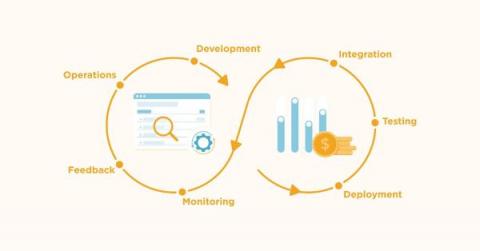
Although refactoring isn’t typically listed as one of the core phases of the software development lifecycle, you cannot leave it out if you intend to keep code running efficiently. The unfortunate thing about software is, it doesn’t usually age very well. Even seemingly perfect source code progressively decays over time — due to the ever-morphing tech ecosystem.

What is Cloud Repatriation and How to Avoid It with Cloud Cost Management

Cloud computing is one of the great technologies of our era. As such, enterprises everywhere are in a hurry to migrate to the cloud. However, one of the less-talked-about trends of our time is cloud repatriation: the process of enterprises reversing their decision, leaving the cloud, and returning to an on-prem setting. According to TechTarget, 85% of enterprises reported plans of repatriating their workloads from the public cloud in 2019.

Data-Driven Software Development: How To Make Strategic Dev Decisions

A fundamental requirement for building a profitable product is finding ways to reduce costs and improve efficiency. When you’re operating in the cloud, it’s almost impossible to gain this insight without data. This is where data-driven software development comes in. Data-driven development is a software engineering approach that relies on data to guide the development process.

AWS Savings Plan: All You Need to Know

Organizations using Amazon Web Services (AWS) cloud traditionally leveraged Reserved Instances (RI) to realize cost savings by committing to the use of a specific instance type and operating system within the AWS region. Nearly 2 years ago, AWS rolled out a new program called Savings Plans, which give companies a new way to reduce costs by making an advanced commitment of a one-year or three-year fixed term.

Cloud cost management and optimization: How to regain control over your bill

The cloud is today one of the most expensive resources for any modern organization, second only to employee salaries and overhead. According to recent research by Gartner, end-user spending on public cloud services will reach $396 billion in 2021 and grow 21.7% to reach $482 billion in 2022. By 2026, Gartner predicts public cloud spending will exceed 45% of all enterprise IT spending, up from less than 17% in 2021.

Virtana Optimize | Cloud Cost Management Solution

With Virtana Optimize, you can increase your advantage by optimizing your capacity and cost in real time on an ongoing basis. Our real-time data collection and analytics identify unused resources that can be eliminated so you can stay on budget, even as conditions and options change, and avoid an end-of-month billing surprise.

What Are On-Demand Instances And When Should You Use Them?

According to Amazon, On-Demand Instances are best reserved for short-term processes with uneven workloads that cannot be interrupted. This might partly explain why such EC2 instances are exceedingly popular with AWS users. On the flip side, however, it turns out that On-Demand Instances are also getting dumped for the sake of cloud cost optimization. Our recent Spot Instances guide, for instance, advises AWS users to consider making a switch and, consequently, enjoy up to 90% cost savings.

A Simple Guide to Taming the Beast That Is Kubernetes

Containers are amazing. But when you start to orchestrate them in a complex environment, they can become quite the beast. Kubernetes is one of the best tools to tame that beast, but few resources exist to help you manage your big data workloads on Kubernetes. If you want to learn how you can optimize your big data workloads on Kubernetes, this is for you.

Lower Your Google Cloud Costs with These 5 Google Dataproc Best Practices

Thinking about using Google Dataproc as your cloud vendor? We can see why. Google Dataproc is a powerful tool for analytics and data processing, but to get the most out of it you have to ensure you use it properly. We’re going to explore five best practices you can use to lower your Google cloud costs while maximizing efficiency: Following these tips will ensure the best performance and help keep your cloud costs in line.