Operations | Monitoring | ITSM | DevOps | Cloud

The latest News and Information on Containers, Kubernetes, Docker and related technologies.

Infrastructure Management: Containers vs Virtual Machines

Trends in tech come and go, but certain underlying primitives stick around forever. In software, two such primitives are virtual machines and containers. Virtualization paved the way for the cloud to become massive. Data centers would likely never have been commercially viable without it. While still relatively new, containerization has already made a serious mark on the software engineering world.

Configure and customize Kubernetes Monitoring easier with Alloy Operator

What if you were to tell Kubernetes Monitoring what you wanted, and the system configured collectors based on your choices? We wondered that as well—wondered enough to create Alloy Operator and its Helm chart for version 3.0 of the Kubernetes Monitoring Helm chart. We’re excited to share that the new Kubernetes Monitoring Helm chart is now available, and it introduces a dynamic way of setting up your telemetry data collection with Alloy Operator.

Are You Correctly Deploying LLMs on Kubernetes in 2025?

We are in mid-2025, and teams across industries are rolling out large language models, or LLMs, to power everything from conversational agents to document understanding. However, getting them to run smoothly in production… That’s still a challenge. A working model isn’t just about putting it in a container and tossing it into a Kubernetes cluster.

Kubernetes CPU Limit: How to Set and Optimize Usage

Kubernetes makes it easy to scale applications. But when it comes to CPU resource management, a poorly tuned cluster can quickly become unstable or inefficient. For network engineers, setting CPU requests and limits correctly—and understanding the deeper implications—is essential for keeping workloads efficient, costs predictable, and noisy neighbors in check.

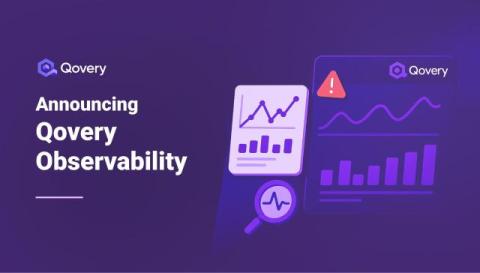
Announcing Qovery Observability: the simplest way to understand your application

We are thrilled to announce the next major milestone in our platform vision: Qovery observability! Qovery Observability is our new product, ready to give you the fastest way to gain a crystal-clear, unified understanding of your application and infrastructure. Fully managed, zero lock-in, you keep the data. Devs love it, no DevOps needed. Coming soon!

Kubernetes sidecar deployment using CircleCI

Kubernetes excels at managing complex, containerized systems, and one of its most impactful patterns is the sidecar. Sidecar containers extend applications by running supplementary processes in tandem. This modular architecture enables enhanced observability, networking, or security layers — all without changing the core application code. Continuous Integration and Continuous Deployment (CI/CD) practices are key to reliably shipping these configurations.

Serverless vs. Containers: A Comprehensive Guide to Choosing the Right Solution

In the rapidly evolving world of cloud computing, network engineers often need to decide between serverless computing and containerization. Both technologies offer unique advantages and are suited to different types of applications. This article aims to provide a comprehensive comparison of serverless computing and containers, helping network engineers make an informed decision based on their specific needs.

Is AI the Future of Software Development, or Just a new Abstraction? Insights from Kelsey Hightower

Join Kelsey Hightower as he shares his thoughts on the current state of AI and its potential impact on software development. In this discussion with Mark Boost and Dinesh Majrekar, Kelsey explores the possibilities and limitations of AI, and how it may change the way we build and interact with software. From the importance of pragmatism to the role of abstraction, Kelsey offers valuable insights for developers, engineers, and anyone interested in the future of technology.

A Simple Guide To GKE Cost Allocation And Cluster Spend

Running workloads on Google Kubernetes Engine (GKE) delivers impressive scalability and flexibility. Yet, it can also introduce a tricky challenge: tracking GKE costs accurately. Remember, GKE costs rarely scale linearly. Overprovisioned nodes, idle autoscalers, and orphaned workloads can quietly balloon your bill in the background. And while GKE’s native tools offer some visibility, they often miss the full picture.

Infrastructure Management: When to Pick Bare Metal or Virtualized Servers

Infrastructure management isn't about taking sides. Too often, teams get pulled into “X is better than Y” debates that miss the bigger picture: your compute stack should serve your needs, not industry hype. A common decision point in the past has been the choice between bare metal or cloud hyperscalar virtualization. Nowadays, the answer isn't 1 or 0.