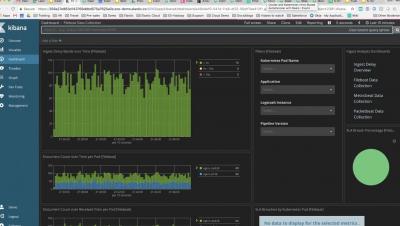
Monitoring Kubernetes with Auto Discovery on the Elastic Stack
Monitor your applications and container infrastructure in a Kubernetes environment with the Elastic Stack.


The latest News and Information on Containers, Kubernetes, Docker and related technologies.
Containers are eating the world and the newly added Containers view in Sematext Cloud helps you manage that. You can experience container monitoring with the new Containers view that provides you with enhanced visibility into all your hosts and containers, drawing your attention to the ones that need it the most.
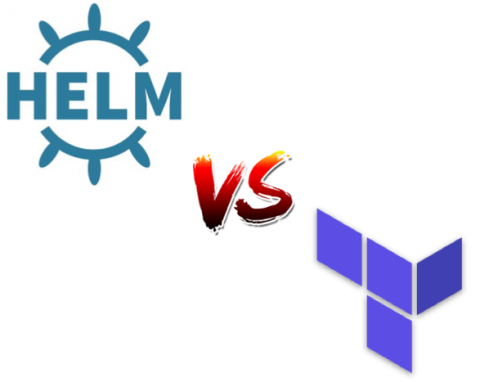
With the increasing adoption of containerization, the need arose to manage, schedule and control clusters of containers, and that’s where Kubernetes comes in. Kubernetes is an open-source system for automating deployment, scaling, and management of containerized applications, generally being Docker containers. When interfacing with Kubernetes, 2 competing tools are often discussed: Terraform, and Helm.
Amazon Elastic Container Service for Kubernetes (Amazon EKS) provides Kubernetes as a managed service on AWS. It helps make it easier to deploy, manage and scale containerized applications on Kubernetes. Sysdig cloud-native intelligence solutions – Sysdig Monitor, and Sysdig Secure – provide Amazon EKS monitoring and security from a single agent and unified platform. Sysdig helps AWS customers see more, secure more, and save time in troubleshooting deployed microservices.
Kubernetes is developing so rapidly, that it has become challenging to stay up to date with the latest changes (Heapster has been deprecated!). The ecosystem around Kubernetes has exploded with new integrations developed by the community, and the field of logging and monitoring is one such example.
In this article we will cover Docker image scanning with open source container security / image scanning tools. We will explain how to to deploy and setup Docker image scanning: both on private Docker repositories, and as a CI/CD pipeline validation step. We will also explore ways of integrating image scanning with CI/CD tools like Jenkins, Kubernetes runtime configuration features and runtime security tools like Falco.
“With Docker, developers can build any app in any language using any toolchain. “Dockerized” apps are completely portable and can run anywhere - colleagues’ OS X and Windows laptops, QA servers running Ubuntu in the cloud, and production data center VMs running Red Hat.