The latest News and Information on Containers, Kubernetes, Docker and related technologies.
One of my former teammates approached me the other day (and by other day i mean like 3 months ago) and asked ‘Am I thinking about this right? Kubernetes is actually akin to the Linux Kernel. So Rancher and OpenShift are distributions of Kubernetes. And for a supported enterprise application I’m more likely to use a more enterprise focused distribution than a DIY distribution, yeah?’ To which I responded ‘Yep, you hit the nail on the head’.
Today’s applications are marvels of distributed systems development. Each function or service that makes up an application may be executing on a different system, based upon a different system architecture, that is housed in a different geographical location, and written in a different computer language.
We are very excited to announce Calico v3.6. Here are some highlights from the release.
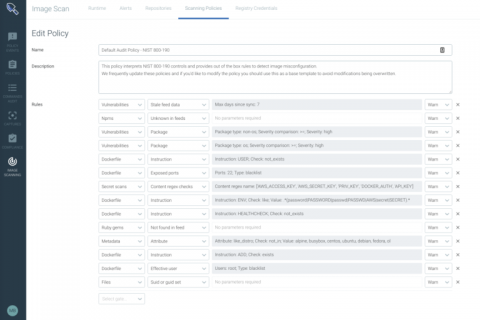
In the new cloud-native world, ephemeral services like containers make security a challenging task. As enterprises start adopting containers in production, they suffer from a great deal of variance in the software, configuration, and other static artifacts that exist across their organization’s container image set.
Container adoption in IT industry is on a dramatic growth. The surge in container adoption is the driving force behind the eagerness to get on board with the most popular orchestration platform around, organizations are jumping on the Kubernetes bandwagon to orchestrate and gauge their container workloads.
Servers are expensive. And in single-application installations, most servers spend the majority of their time waiting. Making the most of these expensive assets led to virtualization, and making the most of virtualization has led to multiple options for virtualizing applications. VMware and Docker offer competing methods for virtualizing applications. Both technologies work to make the most of limited hardware resources, but they do so in significantly different ways.