The latest News and Information on Containers, Kubernetes, Docker and related technologies.
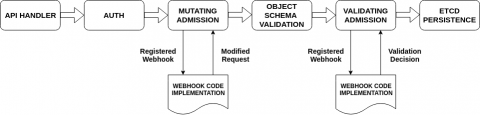
Kubernetes admission controllers are a powerful Kubernetes-native feature that helps you define and customize what is allowed to run on your cluster. An admission controller intercepts and processes requests to the Kubernetes API prior to persistence of the object, but after the request is authenticated and authorized.
Updating information held on container volumes, debugging a running instance, backing up files locally, or just making sure everything is where you expect it to be… remote access is an integral part of any system.
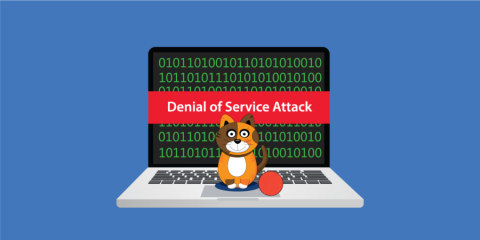
In this article, we’ll explore Calico’s denial-of-service (DoS) mitigation features, including XDP-optimisation support introduced in Calico v3.7.
How are you deploying your applications in 2019? Are you using containers yet? According to recent research over 80% of you are. If you are within this group, were you initially sold on the idea of containers but found that in reality, the complexity involved with this approach makes it a difficult trade-off to justify? The community is aware of this and has come up with a remedy to ease the pain, and it’s called container orchestration.
In an ideal scenario, security would be baked into the development process from the very beginning. Security teams would primarily exist to verify that best practices have been followed at every step in the process. In practice, security is an enormous challenge for most organizations. This challenge is compounded by the increasingly complex and fast-paced nature of modern service-oriented architectures, such as Kubernetes.