Intro to Kubernetes and Rancher Online Training: August 1, 2019
Ready to learn about using Kubernetes clusters and workloads? Watch the latest edition of Rancher's free, weekly intro training to Kubernetes and Rancher.


The latest News and Information on Containers, Kubernetes, Docker and related technologies.
The radical shift towards DevOps and the continuous everything movement have changed how organizations develop and deploy software. As the consolidation and standardization of continuous integration and continuous delivery (CI/CD) processes and tools occur in the enterprise, a standardized DevOps model helps organizations deliver faster software functionality at a large scale.
In the first two articles in this series about using serverless on an open source platform, I described how to get started with serverless platforms and how to write functions in popular languages and build components using containers on Apache OpenWhisk.Here in the third article, I’ll walk you through enabling serverless in your Kubernetes environment.
The holy grail for any CMO looking for their next gig is to find the perfect combination of addressable market, market timing, company, and product. That’s why I am so excited to be joining the team at Rancher Labs, the leader in container management software. Let’s look at all the variables.
Starting this week, we will do a series of four blogposts on the intersection of Spark with Kubernetes. The first blog post will delve into the reasons why both platforms should be integrated. The second will deep-dive into Spark/K8s integration. The third will discuss usecases for Serverless and Big Data Analytics. The last post will round off with insights on best practices.
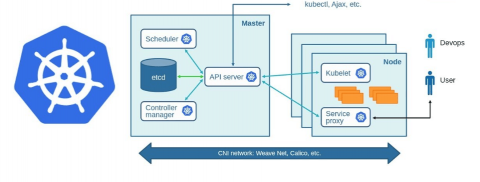
Kubernetes is the de facto open source container orchestration tool for enterprises. It provides application deployment, scaling, container management, and other capabilities, and it enables enterprises to optimize hardware resource utilization and increase production uptime through fault-tolerant functionality at speed. The project was initially developed by Google, which donated the project to the Cloud-Native Computing Foundation. In 2018, it became the first CNCF project to graduate.
Kubernetes is an open-source container-orchestration system for automating application deployment, scaling, and management. It was originally designed by Google, and is now maintained by the Cloud Native Computing Foundation.