Kubewarden v1.5.0
We’re pleased to announce the availability of Kubewarden 1.5.0! This release brings the usual amount of small bug fixes, dependency updates, and a major security enhancement. Let’s take a closer look!


The latest News and Information on Containers, Kubernetes, Docker and related technologies.
We’re pleased to announce the availability of Kubewarden 1.5.0! This release brings the usual amount of small bug fixes, dependency updates, and a major security enhancement. Let’s take a closer look!
If you need to deploy a lot of microservices at once and manage them at scale, Kubernetes is hard to beat. But Kubernetes also brings additional complexity that you just might not need. You would be smart to ask yourself these three questions before getting started with Kubernetes.
How is your organization handling Kubernetes observability? What tools are you using to monitor Kubernetes? Is it a time-consuming, manual process to collect, store and visualize your logging, metrics and tracing data? And, what are you actually getting out of all that investment? At Logz.io we’re trying to make this process easier for customers who are serious about Kubernetes observability. We’ve made significant investments in this area for Kubernetes use cases.
Many organizations rely on distributed tracing in Datadog APM to gain end-to-end visibility into the performance of their Kubernetes applications. But as teams grow, it can become impractical for them to manually configure each new application with the libraries and environment variables needed for tracing.
Kubernetes turns 9 this year and with its maturity each year, it brings new challenges that drive seismic influence across the rapidly changing cloud native ecosystem. Each year we see new tools created and existing solutions optimized from new lightweight distributions, new features across Kubernetes management platforms, and container security solutions, all adding value to users but simultaneously contributing to the complexity are facing to run Kubernetes successfully.
Kubernetes makes it easier for businesses to automate software deployment and manage applications in the cloud at scale. However, if you’ve ever deployed a cloud native app, you know how difficult it can be to keep it healthy and predictable. DevOps teams and SREs often use distributed tracing to get the insights they need to learn about application health and performance.
2022 has been a year full of new releases, new events, and new projects for Open Source Calico. Let’s take a look at Project Calico’s 2022 highlights and see if you’ve missed any exciting news.
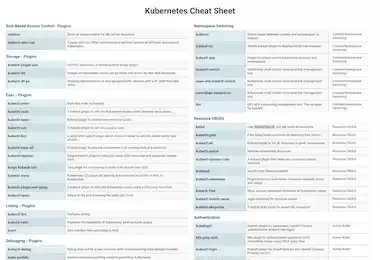
In the world of container orchestration, Kubernetes has become the de facto standard. Despite its simplicity in some respects, it has also introduced new levels of complexity in the deployment and management of distributed applications and services. To assist you with understanding the most common kubectl commands & plugins, we've created a cheat sheet as a reference for operations engineers, software engineers, and cloud infrastructure managers who use Kubernetes primarily.