Operations | Monitoring | ITSM | DevOps | Cloud

The latest News and Information on Containers, Kubernetes, Docker and related technologies.

Modernizing Cybersecurity: New Challenges, New Practices

The practice of cybersecurity is undergoing radical transformation in the face of new threats introduced by new technologies. As a McKinsey & Company survey notes, “an expanding attack surface is driving innovation in cybersecurity.” Kubernetes and the cloud are infrastructure technologies with many moving parts that have introduced new attack surfaces and created a host of new security challenges.

What's New in the Kubernetes 1.28 Second Release

From its humble beginnings, Kubernetes’ growth story continues to be a testament to the power of open-source collaboration, and its current 1.28 second release is certainly no exception. It’s not just a product of ingenious coding but also the sweat and night oil of a global community – from seasoned industry stalwarts to students just making their debut in the open-source world.

Fixing Docker's Slow Performance on MacOS

Docker is designed for Linux. It works most efficiently on Linux systems due to its close integration with the Linux kernel. When handling large filesystems, like the ones built with PHP and Node, Docker desktop (MacOS Environment) experiences significant lag. The main reason is how file synchronization is implemented in Docker for Mac. Plus, disk space consuming behavior of such big PHP Projects.

New report: The state of Calico Open Source 2023

We are excited to announce the publication of our 2023 State of Calico Open Source, Usage & Adoption report! The report compiles survey results from more than 1,200 Calico Open Source users from around the world, who are actively using Calico in their container and Kubernetes environments. It sheds light on how they are using Calico across various environments, while also highlighting different aspects of Calico’s adoption in terms of platforms, data planes, and policies.

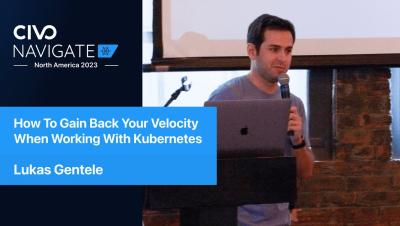
Orchestrating Kubernetes with Terraform + Kustomize - Civo Navigate NA 2023

Jack Ross, Principal Software Development Engineer at Shutterfly, explains the use of Terraform and Kustomize for orchestrating Kubernetes. He distinguishes between Infrastructure as Code and Configuration as Code, outlining their respective benefits. Ross highlights how Terraform interacts with Civo and contrasts the functionality of Helm and Kustomize. The session wraps up with practical code examples illustrating the principles of these tools.

Merging to Main #5: Coexisting Between Kubernetes & Legacy Tech with Mark Panthofer, Nvisia

Are you trying to balance your CI/CD resources and effort between Kubernetes and your legacy tech? Don't know how to encourage adoption of the new processes? On this episode of Merging to Main, we'll cover just that. This episodes guest is Mark Panthofer, VP of DevOps & Cloud at nvisia and, during this session, Brandon and Mark discuss how your CI/CD can coexist between two distinct technology worlds.

Exploring Kubernetes Storage: Persistent Volumes and Persistent Volume Claims

In today's world of container-based applications, the role of storage has become more critical than ever. One of the most significant challenges of containerization is the management of stateful applications. Kubernetes, one of the popular container orchestration platforms, provides a solution to this problem - Persistent Volumes (PVs). PVs allow the storage provision to be decoupled from the lifecycle of the Pod, making it easier to manage stateful applications.

Configuring Kubernetes and OpenShift Monitoring with DX UIM by Broadcom

In this 10-minute how-to video, 1st in a series, learn about DX UIM for new-age infrastructure observability. Watch to learn about the cloud infrastructure monitoring deployment model schematic, how to deploy container monitoring, and how to configure monitoring in the DX UIM Operator Console.

How to Achieve Zero-Downtime Application with Kubernetes

I’ve worked on on-premised and managed Kubernetes clusters for more than seven years. What I can say is that containers have drastically changed the hosting landscape! It has brought a lot of facilities where complex setups were required. Having several instances, with rolling restart, zero downtime, health check, etc. It was such a pain and time effort before (implementing VRRP solution, application monitoring restart with monit like, load balancing haproxy like)!