
Operations | Monitoring | ITSM | DevOps | Cloud

B2B payment ops for exporters and agencies

Exporters and agencies rarely deal with simple payments. A single project may involve several stakeholders, large invoices, international clients, different currencies, and long approval cycles. A delay at any point can influence the flow of cash and create extra manual work. A modern b2b payment gateway is only one part of the solution. Strong B2B payments depend on reliable payment operations and the right payment setup. This guide explains how to build a payment process that helps businesses get paid faster, reconcile invoices more easily, and minimise constant follow-ups.
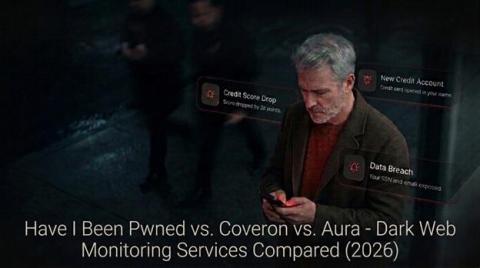
Have I Been Pwned vs. Coveron vs. Aura - Dark Web Monitoring Services Compared (2026)

Have I Been Pwned, Coveron, and Aura solve the same underlying problem in very different ways. Have I Been Pwned answers a one-time question for free, and the two paid services are built for continuous monitoring and recovery of individuals and households. Comparing them head-to-head only makes sense once you separate what a free breach checker does from what a paid identity service is for.

AI's Role in Enhancing Digital Commerce Operations

Artificial intelligence is quickly becoming a must-have for digital businesses, not just a nice-to-have. For companies looking to sharpen their operations, AI offers powerful ways to predict what's next, smooth out customer interactions, and keep transactions safe. It's not about replacing people, but giving them better tools. This lets teams focus on big-picture strategy while AI crunches data and automates tasks. This shift is changing what's possible in terms of how efficient a business can be, how happy its customers are, and how much it can grow.

How Ecommerce Teams Can Scale Local Delivery Without Adding More Dispatch Staff

A store running 20 or 30 local deliveries a day can plan them by hand. Someone pastes the addresses into a maps app, eyeballs a sensible order, screenshots the list to each driver, and the day works out fine. Then the store grows. Ninety orders come in, a third of them carry a two hour window, three are marked urgent, and the two drivers are on different shifts. The same process now eats the whole morning, and the errors it produces cost more than the time it takes.

Adding Routing Intelligence To Your Observability Stack

Observability has a blind spot, and for most teams it sits at the network layer. You instrument your services, scrape metrics into Prometheus, ship logs somewhere searchable, and build dashboards that tell you when something is wrong inside your infrastructure. But the routing that carries traffic to and from that infrastructure often lives entirely outside the stack, watched through separate tools that do not talk to your alerting. This piece looks at why routing belongs in your observability pipeline and what it takes to get it there.

How Ad Blocking Works in 2026: What Still Works After Manifest V3

Ad blocking in 2026 is no longer just about installing a browser extension and forgetting it. The landscape shifted considerably after Google's Manifest V3 rollout reshaped what Chrome extensions can do - and publishers, ad networks, and streaming platforms responded by deploying more aggressive detection and countermeasures. At the same time, users moved beyond browsers into apps, games, and streaming services where browser-based tools never had much reach to begin with.

Why Low-Latency Monitoring Is Mission-Critical for Futures Trading Infrastructure

Futures trading has always been a game of speed, but over the last decade that game has changed entirely. What used to be measured in seconds is now measured in microseconds. Traders, exchanges, and the technology providers who support them are locked in a constant race to shave off every possible delay between an order being placed and it actually executing. In this environment, low-latency monitoring is not a luxury or a technical afterthought. It is a core part of how trading infrastructure stays reliable, competitive, and safe to operate.

How AI Tools Are Reshaping Knowledge Work

Knowledge work has always meant sitting with information, making sense of it, and turning it into something useful. That could be a report, a lesson plan, a research paper, or a business strategy. For a long time, this process depended almost entirely on human effort. You read, you took notes, you organized your thoughts, and slowly you built understanding. Today, that process looks different.

Build a Design Team or Hire an Agency? Here's How to Decide

There's no universal right answer here - only the right answer for where a company stands right now. Companies with a steady stream of design work and the budget to match tend to benefit from an in-house team. Companies facing a single big project, a tight timeline, or an unpredictable workload usually get more value from a web design agency. The decision comes down to three things: how much design work is actually coming, how fast it needs to happen, and how much control the business wants over the process.