

Operations | Monitoring | ITSM | DevOps | Cloud

How to Test a Google Pub/Sub Subscriber

A Google Pub/Sub publish can succeed while the worker that processes it is falling behind. A unit test that calls your handler with one JSON object can check the business logic, but it skips the part where the worker has to nack a delivery, see it again, and acknowledge it with a fresh ack ID. This walkthrough uses the Go order worker in mock-lab’s gRPC lab.

How to monitor SAP API Management proxies and certificates

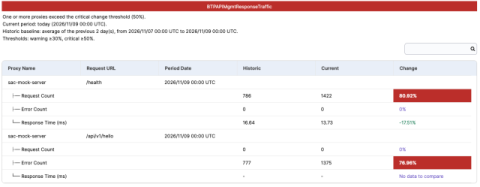
SAP API Management monitoring should show which proxies are returning errors and on which calls, whether traffic or response times have shifted against recent history, and which certificates are close to expiry. Add an inventory of API products and their consumers, and you know both what is failing and who it affects.

Why Playwright Test Repair Needs API Evidence

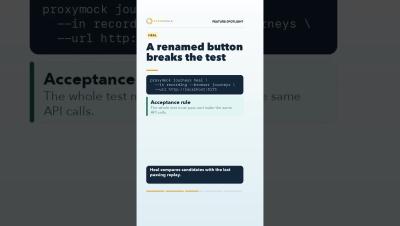
A Playwright test opens Order and checks that an order details panel appears. Then the product team renames the link to Notebook details. The old locator times out. A repair that clicks Order could make the test pass again if the assertion only checks for a panel. The test would now cover a different order, and the green check would hide the switch. The same gap shows up when you write a test from scratch. A traffic recording can tell you that a shopper signed in and opened a particular order.

Generate and Heal Playwright Tests with Recorded API Traffic

The shop in mock-lab has a Load items button that fetches GET /items and displays apples and pears. In this walkthrough, you’ll use the shop’s recorded API response to generate a Playwright test. Then you’ll rename the button, watch the original test fail, and use proxymock to propose a repair. The shop API stays stopped throughout. The exercise extends the existing mock-lab browser journeys lab. The companion article explains why a passing test can still be a bad repair.

Find Sensitive Data in API Traffic with Model-Assisted DLP

A support ticket might put a customer’s name in a sentence like “Call Ada Rivera about the refund on Tuesday.” The JSON key is just note, and the sentence has no recognizable format such as an email address. A pattern scan can miss it, even when the field is worth redacting before the recording becomes a test fixture. In this how-to, you’ll run the same four synthetic support requests through proxymock twice. The first run uses value patterns and JSON key names.

Assign Kubernetes Services to DLP Group Rules

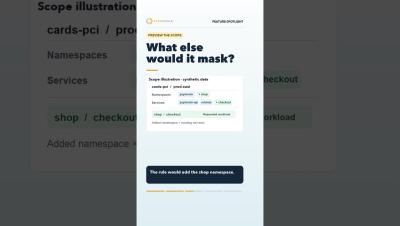
You want to mask the customer field in captured checkout traffic. The payments team already has a DLP group rule that masks that field, so you open Add to DLP rule on the checkout service. The preview shows one more workload. The orders service running next to checkout would also start masking customer. You can reproduce that decision with the orders app in mock-lab’s Kubernetes tutorial.