Operations | Monitoring | ITSM | DevOps | Cloud

Grafana 12, from the founder's perspective: design, scale, and the next chapter

Sometimes the most interesting engineering stories don’t start with a roadmap or a release plan—they start with personal taste. A preference for good design. A frustration with clunky tools. A desire to see everything in one place.

The Future of Dashboards: Git Sync, SQL Expressions, and Dynamic Layouts | Big Tent S3E5

In this episode of Grafana’s Big Tent, Grafana founder Torkel Ödegaard joins Mat Ryer and Tom Wilkie for a wide-ranging conversation about how Grafana began, why design and usability mattered from day one, and how the project evolved into a platform used by tens of millions — from developers to power stations and even space missions.

Tempo 2.10 release: new TraceQL features, LLM-optimized API responses, vParquet5, and more

Tempo 2.10 has arrived, delivering TraceQL enhancements, improved cardinality management for the metrics-generator, vParquet5, and more. You can continue reading and check out the video below to learn more about these and other new features. The Tempo 2.10 release notes and changelog provide more in-depth details and include all of the changes that came with this release.

Business intelligence plugins for Grafana: what's next

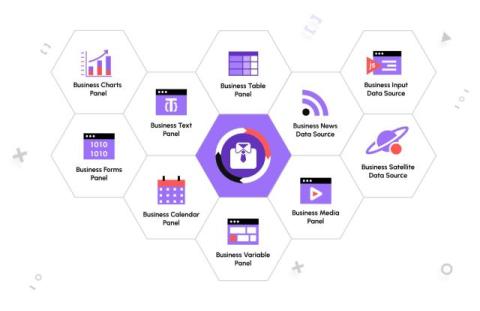
Volkov Labs has been a longtime partner to Grafana Labs, with co-founder Mikhail Volkov contributing to Grafana in the early stages of the OSS project. On Sept. 26, the Florida-based company that recently created a suite of business intelligence (BI) plugins for Grafana announced it had been acquired. In light of the news, Grafana Labs committed to taking over the maintenance and development of their popular business intelligence (BI) plugin suite.

GenAI Observability in Grafana Cloud: End-to-End Agent Debugging (Demo)

From Observability for GenAI Applications (Grafana OpenTelemetry Community Call) We drill into traces to see which agents called which tools, where errors occurred, how long each LLM call took, and how costs and tokens are distributed. The walkthrough also covers using AI assistance to summarize long traces and identify optimization opportunities in real time..

Building a synthetic monitoring solution for Jaeger with Grafana k6

Wilfried Roset is an engineering manager who leads an SRE team and he is a Grafana Champion. Wilfried currently works at OVHcloud where he focuses on prioritizing sustainability, resilience, and industrialization to guarantee customer satisfaction. As an SRE Engineering Manager and a Grafana Champion, I believe a resilient and sustainable cloud experience begins with strong observability.

ChatOps that actually works: Grafana Cloud, Slack, and AI-powered observability

Context switching isn’t just inefficient—under pressure, it’s exhausting. It slows decision-making, increases the risk of mistakes, and makes even experienced engineers feel like they’re always a step behind the system they’re responsible for. At Grafana Labs, we want to build tools that meet you where you are. That's why we embedded Grafana Assistant, our context-aware AI assistant, directly in Grafana Cloud.

React 19 is coming to Grafana: what plugin developers need to know

As part of the upcoming Grafana 13 release in April, we will be updating to React 19, the latest major version of the frontend library for building user interfaces. Grafana uses React as the core technology for its frontend UI and its vibrant ecosystem of plugins. This update ensures we stay aligned with the broader React ecosystem, and allows us to take advantage of ongoing performance enhancements and new functionality provided by React APIs.

Observability for GenAI Applications (Grafana OpenTelemetry Community Call)

In this episode, we’re diving into observability for Generative AI apps. AI helps us write code and monitor applications in production - but how do we observe the AI itself? And how do we make sense of complex, non-deterministic AI systems? We’re joined by two great guests: Ishan Jain, working on GenAI observability and Luccas Quadros, working on Grafana Assistant. Together, they bring both platform-level insights and real-world perspectives.

Fleet Management and Terraform: Use cases and best practices for managing collectors in Grafana Cloud

Earlier this year we launched Grafana Cloud Fleet Management to address the pain that comes with managing scores of telemetry collectors across departments and environments. We've been excited to see how organizations are using it to manage collectors at scale, but we've also heard from users who aren't sure how Fleet Management fits with their existing infrastructure-as-code tooling. The good news is Fleet Management is designed specifically to complement—not replace—tools like Terraform.

OpenTelemetry and Grafana Labs: What's new and what's next in 2026

For many teams, 2024 was the year of asking, “can OpenTelemetry do this?” In 2025, the community answered with a resounding “yes,” moving beyond experimentation to focus on what matters most in practice: stability, ease of use, and cross-project compatibility. That momentum now sets the stage for what’s to come for OpenTelemetry in 2026.

Breaking the Iron Triangle: How AI-powered investigations change the economics of uptime

In engineering, there's a concept known as the Iron Triangle. With three sides—cost, quality, time—it's a framework intended to help you prioritize different aspects of project management Want fast, high-quality features? It'll cost you. Need to keep costs down while maintaining quality? That'll take time. And if you're trying to move fast and cheap? Well, good luck with quality. For years, this has been the brutal reality of running services on the web.

A better way to prioritize feature backlogs: the CERB scoring method

When you're on a software team, planning for the weeks and months to come is always a challenge. You have to balance deep feature backlogs, business and leadership requests, customer requests, and operational interruptions. Effective planning requires a way to prioritize the backlog, set realistic roadmap goals, and justify decisions.

Grafana dashboards: tips for optimizing query performance

Even with a powerful database or visualization layer, performance can suffer if queries aren’t optimized or system settings aren’t tuned. The new Mimir Query Engine in Grafana Cloud improves query efficiency, but there are still best practices you can follow to keep dashboards fast and responsive—whether your data source is hosted in Grafana Cloud or running on-premises.

How to visualize your 3CX contact center phone system with Grafana

Note: this post was co-authored by Nicholas Borg, 3CX Product Manager. 3CX provides a robust, flexible IP PBX platform used by organizations of all sizes to power their contact centers. It offers detailed call activity, agent performance metrics, and operational insights — all of which become even more powerful when visualized.

Grafana Tempo: vParquet5 is coming soon (January 2026 Community Call)

vParquet5 is coming soon, learn about all the improvements and how to use them Have questions? Please bring them! Can't comment in the chat? You may need to create a channel -- you can do this by clicking your photo in the top right corner. Grafana Cloud is the easiest way to get started with Grafana dashboards, metrics, logs, traces, and profiles. Our forever-free tier includes access to 10k metrics, 50GB logs, 50GB traces and more.

2026 observability trends and predictions from Grafana Labs: unified, intelligent, and open

After a decade of dashboards, alerts, and ever-expanding telemetry pipelines, observability is changing. No longer just the domain of engineering, the most innovative organizations are extending observability to all areas of the business to better understand system behavior, emerging risks, and customer impact. At the same time, rising cloud costs and increasing complexity are forcing organizations to be more intentional about what they observe and why.

Mimir's next-gen architecture-Kafka in the middle, object storage underneath, and a whole lot less coupling

Sometimes the most important engineering work starts with a deceptively simple question. Not “What’s the best dashboard layout?” or “How many Ts are in Matt?” (still contested), but something much more fundamental: What if the read path and the write path didn’t have to share the same fate?

How Grafana Mimir Cut Costs 25%: Kafka and WarpStream at Massive Scale | Big Tent S3E3

Big Tent hosts Mat Ryer and Tom Wilkie talk with Marco Pracucci (Grafana Labs), Cyril Tovena (Grafana Labs), and Ryan Worl (WarpStream/Confluent) about building Sigyn (the internal code name for Mimir’s next-gen architecture), public, open source, and designed for lower TCO and stronger reliability. They cover gapless consumption, predictable partitioning, new “block builder” components, and the practical realities of migrating “mid-flight.”