Apache Flink Tumbling Windows
Apache Flink Tumbling windows allow you to aggregate events on non-overlapping, fixed width time windows. Check out how you can create tumbling windows with Flink SQL.


InfluxDB Cloud 3.0 is a versatile time series database built on top of the Apache ecosystem. You can query InfluxDB Cloud with the Apache Arrow Flight SQL interface, which provides SQL support for working with time series data. In this tutorial, we will walk through the process of querying InfluxDB Cloud with Flight SQL, using Java. The Java Flight SQL Client is part of Apache Arrow Flight, a framework for building high-performance data services.
I’m delighted to share that version 7.2 of eG Enterprise has introduced support for performance monitoring of Snowflake databases. eG Enterprise’s integration with Snowflake enables complete visibility into the Snowflake architecture and operations, alongside the performance and costs of any dependent cloud hosted infrastructures such as AWS or Azure.
Over the past few years, time series is one of the fastest growing database categories in the world. As more and more organizations realize how critical time series data is to their operations, more database options entered the market. InfluxDB has been the leading time series database for years, and with the release of InfluxDB 3.0, it remains at the vanguard of the time series world.
A look at the main things you need to consider when planning your IoT project with links to tutorials and source code. There’s a lot of stuff written about the Internet of Things (IoT) at a conceptual level that doesn’t really cover anything concrete. If you’ve ever wanted to get started on a real IoT project but didn’t know where to start, you are in the right place.
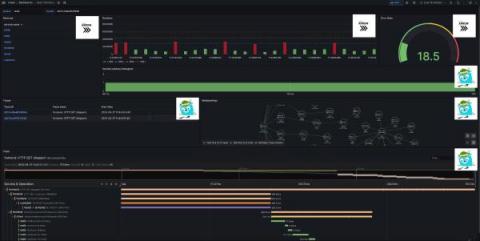
Here at InfluxData, we recently announced InfluxDB 3.0, which expands the number of use cases that are feasible with InfluxDB. One of the primary benefits of the new storage engine that powers InfluxDB 3.0 is its ability to store traces, metrics, events, and logs in a single database. Each of these types of time series data has unique workloads, which leaves some unanswered questions. For example: Luckily this is where our work within OpenTelemetry comes into play.