Operations | Monitoring | ITSM | DevOps | Cloud

Latest posts

8-Step Guide to Customer Journey Mapping in 2023

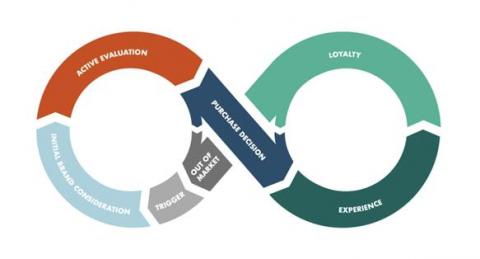
A customer journey is a complete experience a customer has with a business. It includes all customer interactions across channels and touchpoints, throughout every stage of the customer lifecycle – from awareness to retention and loyalty. Image Source: SuperOffice But what is the difference between the customer journey and the customer experience? The customer journey is what customers do at each step of the customer lifecycle.


Grafana: Getting started with TraceQL in Grafana Tempo

TraceQL is a new query language specifically designed for distributed tracing in Grafana Tempo 2.0. This webinar will walk through the basics of writing a TraceQL query and how you can use it to quickly identify traces that are useful to you as a developer or SRE. We will cover the basic mechanics of the language and work through examples to show you how to use this powerful language to find the exact traces you're looking for.

Grafana: Scaling your observability with the Grafana LGTM Stack (European timezone)

Join the Grafana Labs team for a 30-minute demo of how to get started with the Grafana Enterprise Stack, so you can go from zero to observability in just a few minutes. We'll walk through the Grafana user interface while showing how to set up monitoring for a web service that uses Prometheus and Loki to visualize metrics and logs, as well as use and setup Enterprise plugins such as Splunk.

Grafana: Getting started with logging and Grafana Loki

Grafana's Loki open source project for logging aggregation has seen a great uptick in adoption by users benefiting from its small index, ease of use, and cost effectiveness. Enterprises like Grofers and Paytm Insider are using Loki in both Grafana Labs' hosted offering and on premise. And with the release of Loki 2.7, we've made big gains for improving performance through parallelization and query optimization.

Grafana: Getting started with tracing and Grafana Tempo

This webinar is also being offered on Thursday, 25 May 2023 at Along with metrics and logs, tracing is one of the three pillars of modern observability. Grafana Tempo is a high-volume distributed tracing backend whose only dependency is object storage. Unlike other tracing backends, Tempo can hit massive scale without a difficult-to-manage Elasticsearch or Cassandra cluster.

Grafana: Getting started with tracing and Grafana Tempo

This webinar is also being offered on Wednesday, 10 May 2023 at Along with metrics and logs, tracing is one of the three pillars of modern observability. Grafana Tempo is a high-volume distributed tracing backend whose only dependency is object storage. Unlike other tracing backends, Tempo can hit massive scale without a difficult-to-manage Elasticsearch or Cassandra cluster.

Grafana: Scaling your distributed tracing with Grafana Tempo

Distributed tracing is quickly becoming an invaluable part of a modern observability solution by providing a way for developers to understand how requests move through their systems. This ability is increasingly critical in a world where a single request or transaction may touch tens of microservices spread across different containers, environments, and cloud providers.