Operations | Monitoring | ITSM | DevOps | Cloud

How to Integrate The Things Stack with InfluxDB Cloud in Minutes

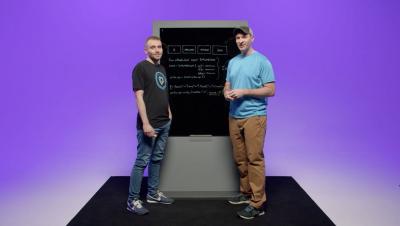
In this demo, Samantha Wang shows how incredibly easy it is to integrate The Things Stack with InfluxDB Cloud, the managed time series platform. All you have to do is use the Things Network InfluxDB Template to ingest your Things data and view monitoring dashboards. From there you’ll be able to perform analytics and set up alerts & notifications. Watch to see how you can do it all in minutes.

Using InfluxDB as an IoT Edge Historian

InfluxDB is increasingly being used in IoT solutions to store data from connected devices. Now it can also be used on IoT edge gateways as a data historian to analyze, visualize and eventually transmit aggregated IoT data up to a centralized server. In this article we’re going to look at three simple ways you can connect an instance of InfluxDB on your IoT Edge device to another instance of InfluxDB in the cloud.

Start with Python and InfluxDB

Although time series data can be stored in a MySQL or PostgreSQL database, that’s not particularly efficient. If you want to store data that changes every minute (that’s more than half a million data points a year!) from potentially thousands of different sensors, servers, containers, or devices, you’re inevitably going to run into scalability issues. Querying or performing aggregation on this data also leads to performance issues when using relational databases.

Getting Started with C++ and InfluxDB

While relational database management systems (RDBMS) are efficient with storing tables, columns, and primary keys in a spreadsheet architecture, they become inefficient when there’s a lot of data input received over a long period of time. Databases designed specifically to store time series data are known as time series databases (TSDB). For example, an RDBMS might look like this.

InfluxData Launches InfluxDB University

Live and on-demand trainings simplify application building for faster Time to Awesome™ SAN FRANCISCO – March 9, 2022 – InfluxData, creator of the leading time series platform InfluxDB, today announced the launch of InfluxDB University (InfluxDB U), an online education platform for customers and developers working with time series data.

Class is in Session - Announcing InfluxDB University

At InfluxData, it’s no surprise that we are passionate about time series data. Our team is committed to helping our community understand its capabilities and sharing easier and more efficient ways of working with InfluxDB, Telegraf and Flux. Our end goal is always to deliver faster Time to Awesome™ for our users. To this end, we’re excited to announce the launch of InfluxDB University.

Using the New Flux "types" Package

As a strictly typed language, Flux protects you from a lot of potential runtime failures. However, if you don’t know the column types on the data you’re querying, you might encounter some annoying errors. Suppose you have a bucket that receives regular writes from multiple different streams, and you want to write a task to downsample a measurement from that bucket into another bucket.

Revisiting The Things Network: Connecting The Things Network V3 to InfluxDB

Back in 2019, David Simmons created an awesome blog introducing LoRaWAN devices and The Things Network. He also showed you how easy it was to connect The Things Network V2 to InfluxDB. Since then, a few things have changed and I thought it was time to revisit the Things Network with a new project.

Troubleshoot From Anywhere with PanSift

This article was written by Donal O Duibhir, Founder & CTO, PanSift. Scroll down for the author bio and photo. In 2015 I gave a brief talk at the Wireless LAN Professionals conference in Berlin about remotely troubleshooting client performance and Wi-Fi at scale. The solution I described then was rough and didn’t yet use a time series database (TSDB), but the requirements and goals are still valid and even more vital today.