Operations | Monitoring | ITSM | DevOps | Cloud

Pivoting InfluxDB Series Data into Relational Layouts

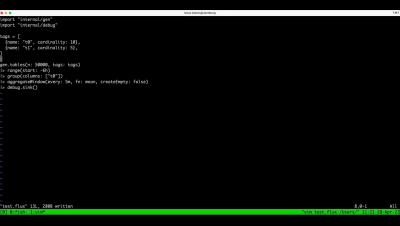
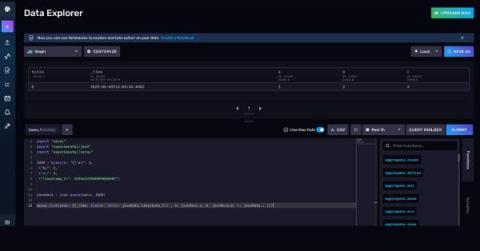
Most developers are more familiar with the shape of relational data than the shape of time series data. InfluxDB stores time series data in such a way to maximize its effectiveness. As developers get more familiar with time series data, it may be helpful to view time series data in a relational layout. Fortunately, Flux language makes it easy to present your time series data the way that's useful for you.

TL;DR InfluxDB Tech Tips: Converting InfluxQL Queries to Flux Queries

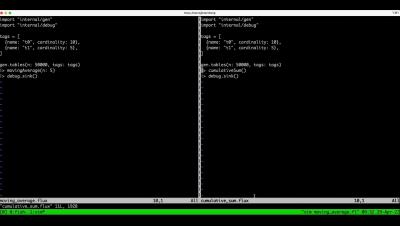
If you’re a 1.x user of InfluxDB, you’re most likely more familiar with InfluxQL than you are with Flux. To gain a deep understanding of Flux, it’s important to understand: However, you can still use Flux without studying those topics. In this TL;DR, we’ll convert common InfluxQL queries into Flux and identify patterns between the two languages to help you get started using Flux more easily if you come from a InfluxQL or SQL background.

InfluxData Recognized for Industry Leadership in 2022 Data Breakthrough Awards

InfluxDB wins Best Use of Data for IoT Applications category SAN FRANCISCO, March 29, 2022 – InfluxData, creator of the leading time series platform InfluxDB, today announced InfluxDB has been named a winner in the Data Breakthrough Awards for the Best Use of Data for IoT Applications category. Conducted by Data Breakthrough, an independent market intelligence organization, the awards recognize the top companies, technologies and products in the global data technology market today.

Where Will Process Historians Fit in the Modern Industrial Technology Stack?

When Rolls Royce Power Systems recently needed to improve its operational efficiency within its manufacturing plants, it didn’t expand its use of a legacy process historian or purchase historian connectors to export data to their business intelligence systems. Instead, it decided to go with a modern time series database, InfluxDB. Graphite Energy, another customer we featured in our recent IIoT announcement, also chose InfluxDB over the legacy process historian vendors. Why?

Mist Clears the Way for Multicloud Observability

A multicloud strategy is a necessity for modern businesses, as the recent AWS outages made clear, but managing this infrastructure remains a huge challenge. Infrastructure management teams have long struggled to juggle diverse technology solutions, policies and services to get access to a point-in-time view of their resources. The result is either waste through overprovisioning or huge overheads for nitpicking manual management and repetitive tasks.

InfluxDB as an IoT Edge Historian: A Crawl/Walk/Run Approach

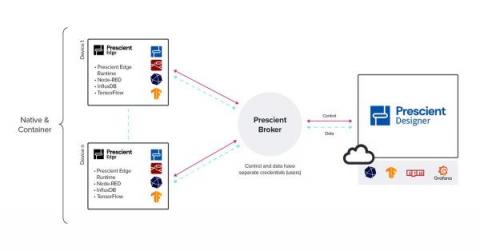
The question of how to get data into a database is one of the most fundamental aspects of data processing that developers face. Data collection can be challenging enough when you’re dealing with local devices. Adding data from edge devices presents a whole new set of challenges. Yet the exponential increase in IoT edge devices means that companies need proven and reliable ways to collect data from them.