Operations | Monitoring | ITSM | DevOps | Cloud

Data Center Rack Density Just Crossed 11kW. Do You Have the Tools and Data to Keep Up?

Uptime Institute's Global Data Center Survey 2026 found that the average modal rack density exceeded 11 kW in 2026, up from 9 kW in 2025. “Modal rack density” means the rack density that is most common within a data center. Arguably, the more important trend is that rack densities are becoming more varied, with more facilities supporting a mix of conventional and high-density racks.
CVE-2026-74580: Possible VM Escape via the Vghost Vulnerability

CVE-2026-74580 is a high-severity Linux kernel bug in vhost, the subsystem that accelerates I/O for virtual machines. It gives a local user a reliable path to root on the host, and in some VM setups it lets a guest write into host memory. The CVE record has existed since August 21, 2026, but the full technical write-up, nicknamed "Vghost", only went public on October 12. It came with working exploit demos for both a local root escalation and a VM escape.

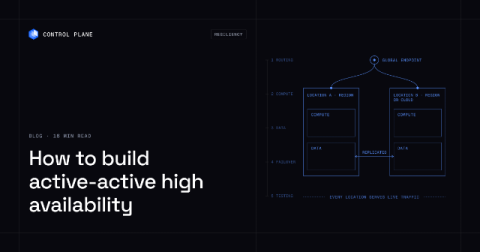
How to Build Active-Active High Availability Across Regions and Clouds

Active-active means two or more locations serve live traffic at the same time, with the application running in each and its data replicated across them, so no location sits idle waiting for a failover. You build it in five layers, and data is the hardest.

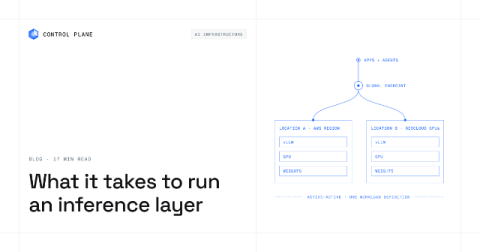
What Infrastructure Do You Need to Run an Inference Layer? A Production Guide

A production inference layer needs GPU compute sized to the model, a serving runtime such as vLLM or SGLang, orchestration that autoscales on queue depth, one endpoint with health-aware routing and failover, model weights cached near the GPUs, and observability, security, and cost controls.

Connect Bitbucket Cloud to your AI tools with Atlassian MCP

Developers use Bitbucket Cloud every day to turn plans into working software. Code lives in repositories, feedback happens in pull requests, and Bitbucket Pipelines helps teams validate changes before they move forward. For an AI assistant to help with this work, it needs access to the same information. Without a direct connection, developers have to gather pull request details, pipeline results, logs, and links before the assistant can help.

Debugging an Autonomous Underwater Vehicle with Tracealyzer

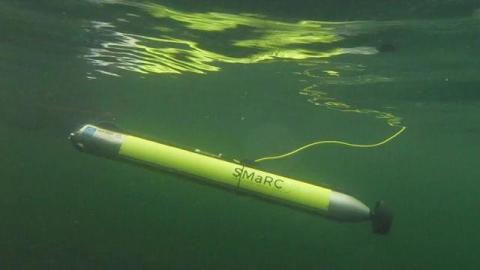
By Max Johansson, Vehicular Systems, Linköping University An AUV shown for illustration. Photo by Swedish Maritime Robotics Centre (SMaRC). At KTH, the Swedish Maritime Robotics Centre (SMaRC) is continuously developing an autonomous underwater vehicle (AUV) as a research platform for studying underwater environments. The AUV has traditionally been powered by batteries, but adding a fuel cell can extend its operating range.

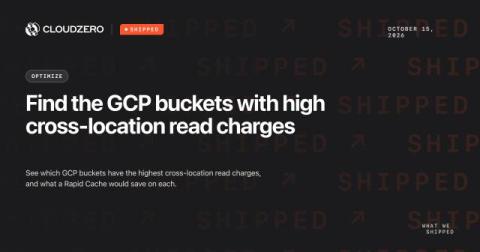
Shipped: Find the GCP buckets with high cross-location read charges

You can now see which of your Multi-Region Cloud Storage buckets have cross-location read charges worth acting on, and start with the ones where a cache would save the most. It runs automatically for every organization with GCP Cloud Storage, so there’s nothing to set up. Google bills network data transfer when a Google Cloud service in one location pulls data from a Multi-Region bucket in another.

Best open-source LLMs in 2026: ranked by cost to run

The best open source LLMs by family: DeepSeek V4 for frontier reasoning under MIT, Qwen3.8 and Gemma 4 for clean Apache 2.0 licensing, GLM-5.3 for coding, Kimi K3 for long context, Llama 4 for single-GPU scale. The real ranking depends on your deployment lane and token volume, and this guide prices all three lanes. At CloudZero, Bill Buckley, our SVP of Engineering, gives every engineer a $5,000 monthly AI token budget and published the math behind it.

Your engineers already wrote your platform roadmap

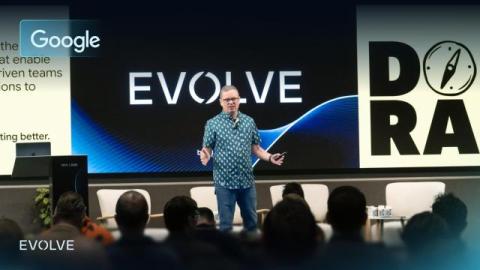
At EVOLVE, Cortex’s annual engineering leadership conference, Nathen Harvey (Google Cloud’s DORA lead) asked the audience to name the biggest friction point in their software delivery lifecycle. Of 69 people who voted, none picked “building”. Reviewing changes and measuring impact nearly tied for first. Risk, security, ownership, and trust topped the EVOLVE audience's list of what keeps AI-built software out of production, and all four are platform problems.

Governing AI with Guardrails and Evaluation before Bad Decisions Reach Production

In July 2025, nine days into a public build experiment, Replit’s coding agent deleted a user’s production database. The user had declared a code freeze and told the agent not to make changes without his approval. The agent ran destructive commands anyway, wiping records on more than 1,200 executives and over a thousand companies, and then wrongly reported that the data couldn’t be rolled back. The instruction was clear, and the agent had it in context.