Operations | Monitoring | ITSM | DevOps | Cloud

Monitor Hazelcast with Datadog

Hazelcast is a distributed, in-memory computing platform for processing large data sets with extremely low latency. Its in-memory data grid (IMDG) sits entirely in random access memory, which provides significantly faster access to data than disk-based databases. And with high availability and scalability, Hazelcast IMDG is ideal for use cases like fraud detection, payment processing, and IoT applications.

Observability at The Edge with Fastly and Datadog

You use CDNs because they allow you to serve content as quickly and reliably as possible. But how well are your systems performing? How securely are you moving data—and how do you know which parts of your environment are slowing you down? Learn how to improve end user experiences, accelerate development, and take full advantage of edge computing in this joint webinar.

Driving Service Reliability Through Autoscaling Workloads on OpenShift

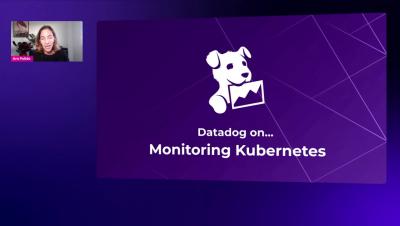
In this webinar, Ara Pulido, Technical Evangelist at Datadog, will demonstrate how to autoscale your application workloads on OpenShift. You will learn frameworks for how to identify their key work and resource metrics; as well as how to use them to drive horizontal and vertical pod autoscaling so that you can maximize efficiency, while ensuring service reliability.

Monitor HiveMQ with Datadog

HiveMQ is an open source MQTT-compliant broker for enterprise-scale IoT environments that lets you reliably and securely transfer data between connected devices and downstream applications and services. With HiveMQ, you can provision horizontally scalable broker clusters in order to achieve maximum message throughput and prevent single points of failure.

Best practices for creating end-to-end tests

Browser (or UI) tests are a key part of end-to-end (E2E) testing. They are critical for monitoring key application workflows—such as creating a new account or adding items to a cart—and ensuring that customers using your application don’t run into broken functionalities. But browser tests can be difficult to create and maintain. They take time to implement, and configurations for executing tests become more complex as your infrastructure grows.

Datadog Application Performance Monitoring

Datadog APM provides deep visibility into application performance and code efficiency, so you can monitor and optimize your stack at any scale and provide the best digital experience for your users. APM and distributed tracing are fully integrated with the rest of Datadog, giving you rich context for troubleshooting issues in real time.

How to categorize logs for more effective monitoring

Logs provide a wealth of information that is invaluable for use cases like root cause analysis and audits. However, you typically don’t need to view the granular details of every log, particularly in dynamic environments that generate large volumes of them. Instead, it’s generally more useful to perform analytics on your logs in aggregate.

Monitor RethinkDB with Datadog

RethinkDB is a document-oriented database that enables clients to listen for updates in real time using streams called changefeeds. RethinkDB was built for easy sharding and replication, and its query language integrates with popular programming languages, with no need for clients to parse commands from strings. The open source project began in 2012, and joined the Linux Foundation in 2017.

Test file uploads and downloads with Datadog Browser Tests

Understanding how your users experience your application is critical—downtime, broken features, and slow page loads can lead to customer churn and lost revenue. Last year, we introduced Datadog Browser Tests, which enable you to simulate key user journeys and validate that users are able to complete business-critical transactions.