Operations | Monitoring | ITSM | DevOps | Cloud

Add metadata to multiple monitors at once

We’ve made monitor metadata easier to manage at scale. You can now use Bulk Actions to add metadata to multiple monitors at once. Select the monitors you want to update, choose Metadata from the Bulk Actions menu, and add the key/value pairs you want to apply. For example, you can quickly add the same team, owner, project, environment, or other custom information across a group of monitors – without editing each one individually.

Introducing the Live Outage Map

We’ve added a new Live Outage Map to StatusGator, giving you a visual way to see where outages are happening across the services you rely on. Instead of checking services individually, you can see outage activity from the last 24 hours in one place – including both detected incidents and live outage reports from users.
Sponsored Post

Home Sweet Hybrid - There's more to your transition than core ERP

Most large enterprises elect a hybrid approach to SAP operations, but this is a more recent trend. And, as SAP operations professionals, we are still learning about the impacts of this choice and approach, even though it's often the most sensible and pragmatic. Years ago, everything ran on-premises. But today it's a mixed architecture of SAP running on-premises, landscapes leveraging hyperscaler platforms, and for customers migrating to Cloud ERP, an even more complicated mix including cloud services like BTP in addition to decades of legacy.
Sponsored Post

Microsoft 365 Monitoring for MSPs: Why the Admin Center Isn't Enough

Managed Service Providers are responsible for an increasing proportion of their customers' cloud infrastructure. For many MSPs, Microsoft 365 has become one of the most important parts of that responsibility. Email, Teams, SharePoint, OneDrive, Entra ID, Intune and Microsoft 365 licensing can all sit within the same customer environment. Add security configuration, Microsoft Secure Score and user lifecycle management, and there is a considerable amount for an MSP to monitor.

SAP Basis Automation: A Practitioner's Guide to 5 Scenarios and ROI

Automating SAP Basis tasks means trading manual, repetitive administration work for scheduled or event-driven workflows. These workflows typically include automated health checks, job monitoring and recovery, system refresh post-processing, and patch validation. This guide covers five things worth automating: four recurring operational tasks that return hours back to your team, plus a fifth layer, AI-driven diagnosis, that sits on top of all four and catches what routine automation can’t.

Mobot levels up: Build incident response playbooks with natural language

We’ve recently shown how Mobot, Sumo Logic’s AI assistant, has evolved from a search assistant into a true thinking partner, introducing natural language to log analysis and monitors. Today, we’re bringing that same conversational reasoning to one of the most powerful parts of the platform: playbooks in Automation Service. Historically, playbook authoring has been a highly manual process that required deep organizational and Sumo Logic platform knowledge.

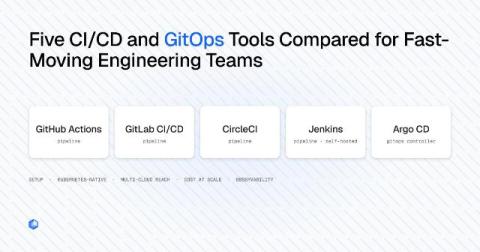
Five CI/CD and GitOps Tools Compared for Fast-Moving Engineering Teams

Your pipeline works. The build passes, the image lands in the registry, and the job turns green. Then someone asks why production still runs the old version, and you spend the next two hours determining whether the problem is a deployment configuration, a runner, an approval rule, or the runtime itself. That is the wrong-tool tax.

Managing Kubernetes node drains with Pod Disruption Budgets

Kubernetes normally excels at preserving uptime during maintenance tasks, but it’s not always perfect. Even something as benign as consolidating nodes after a traffic spike could take your application offline if not done carefully. This is where PodDisruptionBudgets (PDBs) come in. In this blog, we’ll explain why PDBs are important, what the risks are of not implementing them, and how you can find out which of your own deployments are missing PDB definitions. ‍

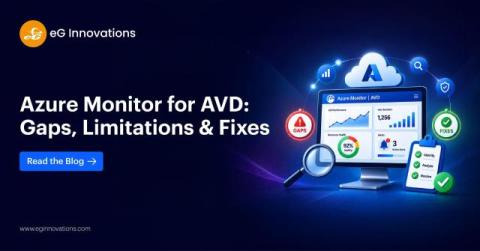
Azure Monitor for AVD: Gaps, Limitations & Fixes

Microsoft Azure Monitor is an essential platform service for monitoring Azure resources. It provides valuable telemetry, logs, metrics, and alerts that help administrators understand the health of their cloud infrastructure. For organizations running Azure Virtual Desktop (AVD), Azure Monitor is usually the first monitoring service they deploy.