Operations | Monitoring | ITSM | DevOps | Cloud

The 5 best Jira reporting tools for 2026

Jira is the backbone of project management for thousands of agile teams worldwide. But while Jira excels at tracking issues and sprints, its native reporting can leave teams wanting more — especially when it comes to sharing insights, visualizing trends, and integrating data from across the business. That’s where dedicated Jira reporting tools come in. In this guide, we rank the 5 best Jira reporting tools on the market today.

Building Web API integrations that scale (5 key lessons)

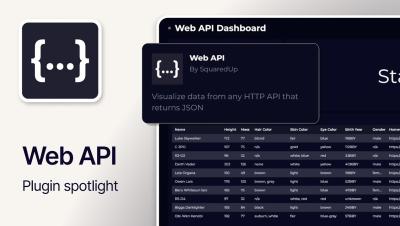
I've used the Web API plugin with a wide range of APIs, and each one taught me something new. But before diving into building, I learned to pause and ask: What am I actually trying to display? Not what data the API can give me, but what would be useful on a dashboard? That shift in thinking — from ‘fetch everything’ to ‘fetch what matters’ — shapes how I approach every integration.

16 new integrations - powered by AIready Low Code Plugins

Today marks a big milestone in our mission to bring more data, more context, and more visibility into a single, unified view. We’re excited to announce 16 brand‑new integrations, extending the range of data sources you can connect with just a few clicks. But the integrations themselves are only half the story.

Dashboarding Azure: SquaredUp vs Grafana

If you’re looking for a dashboarding solution today, chances are you’ve looked at Grafana or SquaredUp — or both. Grafana is a popular open source dashboarding tool with on-prem and cloud variants, while SquaredUp is the SaaS, cloud-based unified dashboarding solution. Both offer a comprehensive list of data sources that they can plug into and build dashboards. As such, they both also offer an integration with Azure - which is the focus of our discussion today.

A new perspective on dashboard sprawl

Dashboards are supposed to answer questions, not create more of them. But investigations don't stop at a single view. The moment you want to understand one specific thing in detail like a failing VM, a degraded service, a slow pipeline, dashboards start to break down. You end up either building yet another dashboard or searching through many different ones. SquaredUp's Perspectives changes this.

Dashboard organization isn't about folders - it's about visibility

Having well-organized dashboards is just as important as having good dashboards. But dashboard organization shouldn’t just make things easy to find. It should provide structure that supports collaboration and efficient troubleshooting. It has to be more than a basic folder system. This post looks at how classic dashboarding tools handle organization today, where they fall short, and how SquaredUp Workspaces organize for visibility and shared context.

Getting Started with Splunk Dashboards

Splunk is a leading platform for searching, monitoring, and analyzing logs across IT tools and systems. Well-known for its ability to handle vast volumes of log and event data, Splunk empowers organizations to gain real-time visibility into their systems and operations. However, while Splunk offers rich telemetry and analytics, its dashboards can sometimes become complex - making it difficult to surface the most critical insights quickly. That’s where SquaredUp can elevate the experience.

Getting the Right Signals: Mobile Observability with Embrace and SquaredUp

More than half of all connections to web services now originate from mobile devices. Mobile apps are no longer peripheral - they are central to how businesses engage customers, deliver services, and generate revenue. Despite this shift, many organizations still rely on observability tools that are fundamentally server-centric. These platforms are adept at monitoring backend health, but they often fail to capture what’s happening at the edge - on the mobile device itself.

Visualising Sentry analytics with SquaredUp

Sentry is a mature observability product with SDKs supporting nearly every major programming language. It has expert knowledge of each coding stack and is therefore capable of offering rich insights with a minimum of initialisation required by the developer. You don’t need to set up OpenTelemetry collectors or wrestle with endpoint configurations; simply drop the SDK initialisation into your application start-up process and telemetry begins flowing into the Sentry backend.

Building high performance dashboards with SquaredUp and ClickHouse

ClickHouse is redefining the boundaries of analytical database performance. Trusted by hyperscalers like Netflix, OpenAI, and Disney, it delivers sub-second query responses on billions of rows and scales seamlessly to petabyte workloads. The great news is that it is open source, so this power is available to everyone. You can spin up a local instance running in a Docker container in a matter of seconds.