Operations | Monitoring | ITSM | DevOps | Cloud

Getting started with VMware dashboards

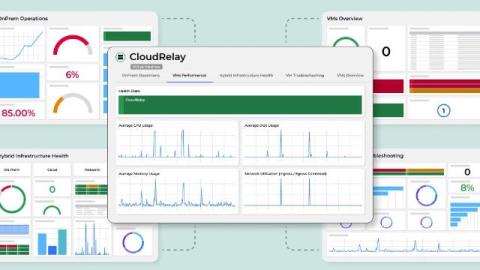
VMware is a leading platform for virtualization and cloud infrastructure, widely used to manage compute, storage, and networking resources across on-premises and hybrid environments. While it offers powerful capabilities and extensive telemetry through tools like vCenter, navigating this data can be overwhelming – especially when trying to spot performance issues, capacity trends, or VM sprawl in real time. That’s where a solution like SquaredUp can make a significant difference.

Customizing your Azure DevOps DORA metrics dashboard

Looking to configure and customize a DORA metrics dashboard? Our Director of Engineering Services, Tim Wheeler, demonstrates how to customize the DORA Metrics dashboard in Azure DevOps for SquaredUp. He shows how to populate key metrics like deployment frequency and change failure rate by selecting a pipeline, specifically the Squared Up multi-stage pipeline.

Operational Intelligence - the new horizon of observability

Monitoring your systems isn't enough anymore. Neither is “asking questions about your system”. Operational Intelligence embraces observability to proactively deliver business insights, support decision-making, and accelerate innovation. It seems that as the observability market grows and more and more products come into the space, the meaning of the term observability itself becomes more and more nebulous.

We did it! SquaredUp is now a B Corp

After four years. Hundreds of meetings and conversations. Countless forms and paperwork submissions… …We’ve done it. SquaredUp is finally, officially B Corp certified We can now say that we are part of a unique global movement – and we couldn’t be more proud, excited, and motivated for our journey ahead.

Getting started with Cloudflare dashboards

Cloudflare is a widely adopted web performance and security platform, best known for its CDN, DDoS protection, and DNS services. While it provides rich telemetry and real-time analytics, the sheer volume and complexity of the data can make it hard to identify key trends or issues at a glance. This is where a solution like SquaredUp (or another dashboarding tool) comes in.

Custom timeframes are here!

In the realm of data and observability, timing is everything. Until now, SquaredUp provided fixed time options like the last hour, 12 hours, 24 hours, last week, and this month. While these options served many users well, we recognized that they lacked the flexibility you needed. Whether you're tracking long-term performance, comparing trends, or looking into specific events, we know these preset options could sometimes feel limiting.

Getting started with HaloPSA dashboards

The HaloPSA plugin is a new addition to SquaredUp, and helps you create live dashboards that surface the important metrics – giving you and your team a single pane of glass for help desk performance, asset visibility, and client reporting. Why it matters: If your team uses HaloPSA to manage tickets, assets, and clients, then you already know how vital that data is for running smooth operations.

The 3 smart updates to our Jira plugin

The Jira plugin is one of our most-used integrations and for good reason. Teams rely on it daily to stay on top of work, manage issues, and ship on time. As more people leaned on it, we saw a chance to make the experience even smoother. So, we gave it an upgrade. We’ve refreshed the out-of-the-box dashboards, simplified the data streams, and improved the overall experience. So, let’s take a closer look at what’s changed.

Our latest Pingdom data improvements - to get more from your monitoring

At SquaredUp, we’re obsessed with making monitoring not just powerful, but a genuinely delightful experience for engineers and teams. When we first built our Pingdom plugin, the goal was simple: make website uptime and performance data easy to visualize alongside everything else you care about. But as our users pushed the boundaries—connecting more endpoints, demanding richer insights, and needing faster troubleshooting—we realized our plugin needed to keep up.