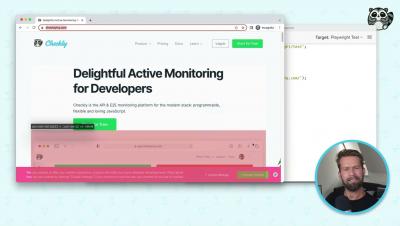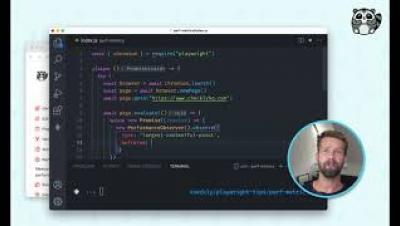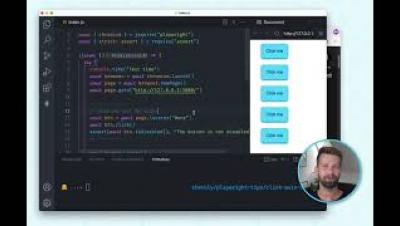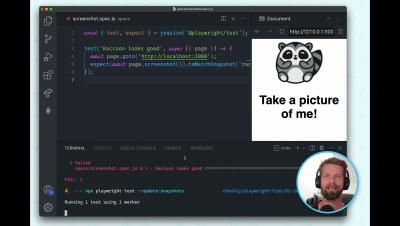
How does one manage monitoring in the age of digital infrastructure as code? Also as code, of course! Combining HashiCorp Terraform Cloud and Checkly enables you to configure synthetic and API monitoring as part of your existing infrastructure codebase. It is flexible, programmable and will keep you out of maintenance hell, even at scale: it is monitoring for developers. Extending your existing Terraform Cloud configuration takes only two minutes. Let's take a look together.
When we decided to build Checkly's browser checks, we chose to do so with Puppeteer, an open-source headless browser automation tool, later adding Playwright, too. We wanted to support users with synthetic monitoring and testing to let them know whether their websites worked as expected at any given moment. Speed was a primary concern in our case. Yet, determining which automation tool is generally faster is far from simple.
We recently optimized the hell out of our Lighthouse score, and one of our landing pages went from a low 70s score to a cool 96 and above score. Below I describe what started as a quick lunch break peek into the Google Search Console. I recognized that our 'Pingdom alternative' landing page ranks surprisingly well with nearly no investment. BUT the competition was ranking even better. So, why? Common knowledge is that Google-Search is using hundreds of ranking factors.
Managing large numbers of checks by hand quickly becomes cumbersome. Luckily, Checkly's REST API allows us to automate most of the repetitive steps. Building on that API, the Checkly Terraform Provider takes automation one step further, enabling users to specify their active monitoring setup as code. In this article, we will be building on top of John Arundel's great intro from a few months back and showing how to manage multiple checks using groups and shared code snippets.
We are really excited to announce that you can now use Playwright in your browser checks. If you didn't know yet, Playwright is Microsoft's headless browser library. It's very similar to Puppeteer. In fact, it was built by the original creators of Puppeteer and has mostly the same features and a remarkably similar API. This was in our public roadmap and cooking for some time now and we're glad to have it out the door!
After weeks of writing, researching and hopefully enough proofreading, we just launched a living collection of practical guides on leveraging headless browser tools (starting with Puppeteer and Playwright) for testing, monitoring, scraping, performance measuring and more. We called it theheadless.dev. This article is about the different approaches we tried in contributing ideas to the Puppeteer community, as well as the principles that guide our latest contribution.
We just updated our SSL certificate expiration alerting. This update gives you more control over where and when you want to receive these alerts. Before today, certificate alerts were set as part of "Alert Settings" tab, either globally or using specific settings for checks & check groups. This wasn't all that flexible and more granular control was already on our public roadmap.