Operations | Monitoring | ITSM | DevOps | Cloud

The latest News and Information on Observabilty for complex systems and related technologies.

How to Choose an Observability Platform: A Growth-Stage Framework

Every engineering team eventually hits the same wall: the monitoring stack that was fine six months ago now can't answer the questions you're actually asking during an incident. This isn't a tooling failure, it's a growth mismatch. The right observability platform at 10 engineers is rarely the right one at 100, and the cost of getting that wrong isn't the subscription fee, it's the migration you'll be forced into later, usually mid-incident, usually under pressure.

It was surprisingly hard to break CloudNativePG replication

I wanted a Postgres replica that falls behind its primary. Sounds easy. It wasn't. Every time I cut the replica off from the primary, its lag jumped for a moment and then dropped right back to zero. It just would not stay behind. Chasing down why turned into a fun little tour of how a Postgres standby keeps itself alive, and what CloudNativePG quietly sets up behind the scenes.

Why Static Reachability Isn't Enough for CVE Remediation

Most CVE remediation tools can tell you that a vulnerability could be exploited. Few can confirm whether it actually is. A scanner flags the same CVE in two services and marks both as vulnerable. Only one of them ever runs the flawed code in production. That gap, reachable in theory versus reachable in fact, is the real problem, and static analysis alone cannot close it.

On Release Days We Wear Teal Episode for release 4.19

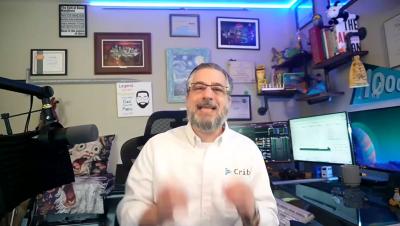
In this episode, Leon explores some of the new features, functions, updates, and improvements in release 4.19, which includes a raft of AI-enabled features including the Cribl Apps, integrated MCP server, and the fact that AI features are now turned on by default. For more information, check out these links.

Cost attribution in Grafana Cloud: Manage spend across observability and testing workflows

Knowing what you're spending on observability is useful. Knowing which team, service, or project is driving that spend is what actually lets you act on that information. Cost attribution is a core part of how Grafana Cloud approaches cost management and optimization.

Embracing the Code Review Bottleneck

Roughly a year ago, I left Honeycomb’s SRE team to join the newly formed Tenant team, which works on our Private Cloud offering. This team held some significant challenges on its roadmap if it wanted to demonstrate that the offering was possible, would be worth the cost, and could be done without representing a heavy tax on the rest of the organization.

Why Internal Agents Must Be Rebuilt with Runtime Context

As we entered 2026, enterprises raced to build internal AI engineering agents, automating incident response, code review, and support. The investment was real, but 88% of these pilots never reached production, and teams are now in rebuild mode, trying to understand why. Live runtime validation was the key architectural decision skipped in these v1 agents and it’s still missing from many v2 designs. Agents need to verify their reasoning against production before they act.

Build a Docker Monitoring Dashboard in Minutes with Claude MCP + Uptrace

In this video, we use Claude MCP to create and merge Docker container dashboards in Uptrace — directly from the terminal, no manual clicking required. What you'll see: CPU, memory, network, and disk I/O dashboards created with plain text prompts Two dashboards merged into one unified view Dashboard exported as YAML for version control.

Instant Kubernetes Observability with Proxymock #speedscale #kubernetes #ebpf #devops #cloudnative

Learn how to get instant observability into your Kubernetes cluster by installing the Speedscale operator and proxymock tool. In this step-by-step tutorial, we walk you through setting up the operator to capture live network traffic (including encrypted traffic, API calls, and database calls) without complex instrumentation or manual configuration.