Operations | Monitoring | ITSM | DevOps | Cloud

A Comprehensive Guide to Chatting Rules and Etiquette for Service Desk Teams

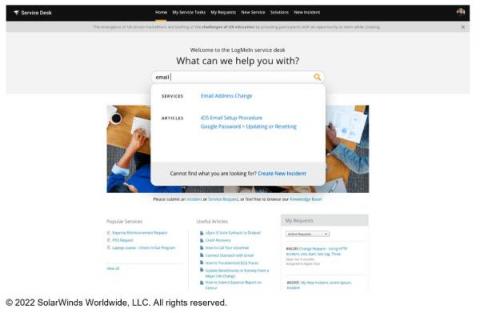
It’s increasingly common for service desk teams to perform some support operations over a live chat. This is a win for everyone. When using chat support, employees are looking for quick wins when it comes to solving their problems, and in many cases, the service desk can help them quickly without needing a site visit. I worked the service desk way before online chats were possible, but the truth is not much has changed since then.

Top 7 Customer Service Skills Every Service Desk Team Should Have

Internal IT support teams are often the first place employees turn for help with technical issues, and it’s important for team members to be able to quickly understand problems, identify solutions, and enable the employee to get back to work. Though there are plenty of technologies and organizational practices capable of improving support service teams, team-wide skills are the heart of every great service provider.

Can Shift Left Go Too Far? Why Testing in DevOps May Never Be the Same

Testing is commonly understood to be an essential and fundamental part of software development, but when and how to test is open to a wider variety of opinions. DevOps practitioners often advocate for performance and quality testing early in the development and deployment process. This is known as a “shift left” approach.

From Smokestack to Full-Stack: Observability and the Digitization of Manufacturing

The pandemic hit manufacturing hard, with the workforce, supply chains, and investment all taking heavy blows. The bounce-back has also been punishing on the sector, with severe global competition for materials, disrupted logistics, and workforce shortages, all exacerbated by the human and economic disaster of Ukraine.

The Power of Harnessing DevOps for the Database

Why do some organizations excel in streamlining their database operations and applications development while others find it immensely challenging? Why can some database teams embrace agility while others take months of cycles to deploy even a single line of code? What secret sauce can allow some database teams to work smarter (not harder), streamline database development lifecycles better, get to deployment faster, and create an overall stronger alignment across departments?

8 Change Management Best Practices You're Probably Not Following

 Change management methodologies are often seen as complex and clunky, which can lead to these initiatives having a high failure rate in many organizations—but why does change management have this stigma? At one point in my career, I was a regular at change advisory board (CAB) meetings and maintained our organization’s standard change catalog.

User Experience for Observability

Modern software applications involve multiple layers of code and services, working together to meet increasingly demanding user requirements. To achieve this, systems became distributed, providing improved scalability, fault tolerance, and complexity. However, this innovation brought new challenges to basic troubleshooting and performance monitoring to maintain the health of systems. It’s for these reasons that observability is trending.

Recapping Our Inaugural SolarWinds Day Event

Our inaugural SolarWinds Day event was a smashing success! From the announcement of our SolarWinds® Observability solution—which was built fully in the cloud—to important updates to our on-premises SolarWinds® Hybrid Cloud Observability solution, this was our biggest day of product launches since the founding of SolarWinds. It was exciting to be a part of the event and to see so many people participate and engage in the discussion.

Containers vs. Virtual Machines: Rivals or Friends?

Containers have been the buzz among developers in recent years with the adoption of cloud-native orchestration tools like Kubernetes and DevOps workflows centered around containers. At the same time, virtual machines (VMs) still power many enterprise workloads, whether they’re running in a public cloud provider like Azure or an on-premises data center running VMware. In one of my early jobs, we built a private cloud—in 2012. This was a ground-breaking project at the time.