Operations | Monitoring | ITSM | DevOps | Cloud

Comprehensive Guide to Developing and Deploying a Python API with Docker and Kubernetes (Part I)

In the evolving landscape of software development, containerization and orchestration have become pivotal. Docker and Kubernetes stand at the forefront of this transformation, offering scalable and efficient solutions for application deployment. This guide provides a detailed walkthrough on developing a Python API, containerizing it with Docker, and deploying it using Kubernetes, ensuring a robust and production-ready application.

Securing IoT Devices with Firewall Monitoring: A Comprehensive Guide

The proliferation of Internet of Things (IoT) devices has transformed various sectors, offering enhanced efficiency and connectivity. However, this expansion also introduces significant security challenges. Implementing robust firewall monitoring is essential to protect these devices and the networks they inhabit.

From Logs to Metrics Part 2: Building an Open-Source Logs-to-Graphite Pipeline

Monitoring doesn't always need to be complex. In this guide, we'll show you how to transform some raw logs into usable metrics using a lightweight, open-source setup. We'll also use the Telegraf agent to convert logs into Graphite metrics that you can easily visualize and alert on. This is ideal for system admins, DevOps beginners, or anyone interested in building more innovative monitoring pipelines from scratch.

The Best Open-Source Dashboard Tools for 2025: Expert Guide to Choosing the Right One

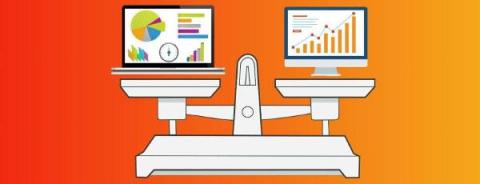
Table of Contents In today’s digital operations, dashboards aren’t just nice-to-haves—they’re essential. Teams across engineering, product, operations, and business intelligence rely on real-time data visibility to monitor systems, analyze trends, and catch anomalies before they escalate. For many organizations, open-source dashboard tools offer the best combination of flexibility, transparency, and cost-efficiency.

Easiest Way to Monitor Loki Performance With Telegraf

Loki is a powerful, scalable log aggregation system designed by Grafana to efficiently collect, store, and query logs. It’s often deployed alongside Prometheus as part of modern observability stacks. Loki’s design emphasizes cost-effective storage by indexing only metadata, which makes it a great choice for high-volume environments. But while Loki excels at log ingestion and indexing, many teams overlook the critical task of monitoring Loki itself.

From Logs to Metrics Part 1: Building an Open-Source Logs-to-Graphite Pipeline

Monitoring doesn't always need to be complex. In this guide, we'll show you how to turn raw logs into usable metrics using a lightweight open-source setup with no ELK stack and no heavy lifting. We'll use Loki, Python, and Telegraf to convert logs into Graphite metrics you can easily monitor or alert on. This is perfect for system admins, DevOps beginners, or anyone curious about building more innovative monitoring pipelines from scratch.
Sponsored Post

How to Configure OpenTelemetry as an Agent with the Carbon Exporter

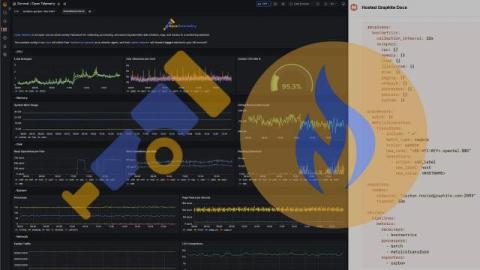
If you're already using OpenTelemetry for tracing and logs, adding otelcol-contrib as an agent for system metrics just makes sense. It keeps everything in the same pipeline, so you're not juggling multiple monitoring tools or dealing with inconsistent data formats. Plus, with built-in support for host metrics, custom processing, and direct exports to Graphite, it's a solid way to ship performance data without extra overhead. In this article, we'll detail how to install the OpenTelemetry Collector Contrib distribution, and configure it to export system performance metrics to a Graphite datasource.

Will it Monitor? Tracking the ISS in Real Time

Tracking the International Space Station (ISS) as it orbits Earth is not just a captivating endeavor for space enthusiasts, it's also an excellent demonstration of how real-time data collection and visualization can be achieved using readily available open-source tools. To monitor the ISS location and trajectory, we'll demonstrate how to set up a simple cron job to fetch it's coordinates every five minutes, parse the data into a suitable format, and visualize it on a dashboard.
Sponsored Post

Step by Step Guide for Using the HG-CLI Agent Installation Tool

Our latest project at MetricFire is a brand-new CLI tool! This tool makes agent installation on any OS a breeze, and we are quite proud of it. In this article, we'll share an overview of HG-CLI, and how to use it in Terminal User Interface (TUI) and Command Line Interface (CLI) mode. We'll also show you what to do with the metrics that are collected and forwarded to your Hosted Graphite account, giving you a full server monitoring setup in minutes!

Easiest Way to Monitor Your Java Application Using OpenTelemetry

When you're running a Java application, the JVM is doing a ton of work behind the scenes but unless you're actively collecting its internal metrics, you're essentially flying blind. Fortunately, the JMX Prometheus Receiver paired with the JMX Java Exporter Agent offers one of the simplest and most effective ways to expose JVM performance data.