Operations | Monitoring | ITSM | DevOps | Cloud

SRE Report: AI optimism and the economics of effort

For eight years, the survey behind the SRE Report has used a consistent methodology. That consistency allows us to track how reliability work evolves over time, rather than relying on snapshots. One of the most stable questions in the survey asks respondents to estimate how much of their work, on average, is spent on toil. Between 2020 and 2024, responses showed a gradual decline in reported toil.

The SRE Report 2026: Defensible Ns

You shouldn’t have to understand the care behind this report, unless it’s missing. For the past eight years, this research has focused on all things related to reliability and resilience. How systems behave under stress. How teams respond when things break. And how the practices continue to evolve. Reaching the eighth edition of The SRE Report attests to that and gives me pause. You can read the full report here and you can find a summary of the key findings here.

SRE Report 2026: What surprised us, what didn't, and why the gaps matter most

This is the eighth edition of the SRE Report. Eight years of tracing reliability's arc, from uptime obsession to experience, from toil to intelligence, from systems to people. This year's report is also the first since Catchpoint joined LogicMonitor. We want to acknowledge their support in keeping this work going. They get what this report means to the reliability community, and that matters. We made a deliberate choice this year to say less.

Why Synthetic Tracing Delivers Better Data, Not Just More Data

In modern observability practices, distributed tracing has become table stakes. Most application performance monitoring (APM) platforms encourage an “instrument everything” approach: Deploy an SDK or agent, hook into every service call and capture every user interaction at scale. On paper, this sounds like complete visibility. In practice, it can turn into a costly firehose of data with diminishing returns.

Creating the IPM Category: Catchpoint's Journey to Leadership and the LogicMonitor Era

On December 15, 2022, Catchpoint launched Internet Performance Monitoring (IPM) as a new category for monitoring solutions with our foundational article, “What is Internet Performance Monitoring and How is it Different from APM?” In it, we said: How prophetic those words turned out to be.

A New Chapter: LogicMonitor + Catchpoint - A Personal Note from Mehdi

In 2008, I was sitting in my garage office with a simple but stubborn idea: the Internet deserved better. End users deserved better. Companies needed a way to truly understand what their customers were experiencing, not just what their servers were reporting. Digital Experience Monitoring wasn’t a category yet. But the need was unmistakable. That idea didn’t come from theory or ambition. It came from lived experiences.

Cloudflare outage: another wake-up call for resilience planning

Another day, another massive Internet disruption, and this time it’s Cloudflare taking huge parts of the Internet offline. This incident is not an anomaly. It is part of a recurring pattern that has become standard in digital infrastructure. We have reached an inflection point in digital operations. Outages at major cloud and content delivery network (CDN) providers are now expected. The only real uncertainty is when it will happen next.

Catchpoint Peak Performance Summit 2025: Redefining Observability for the Outcome Economy

We recently hosted our first-ever Peak Performance Summit in Bangalore, India, a one-day event focused on how value-based observability drives digital business outcomes. The summit brought together customers, partners, and technology leaders to share real-world experiences, live demos, and forward-looking ideas. The message running through every session was clear: performance isn’t just about speed. It’s about measurable business results.

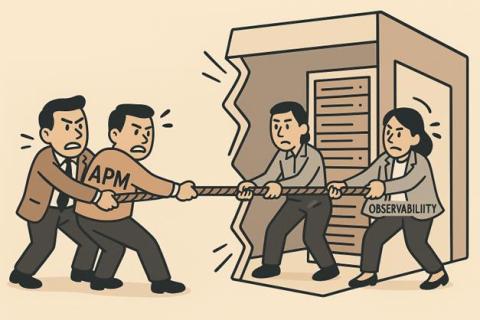
APM vs Observability: What comes next?

Remember how I said that blog was going to be my last entry on the topic of "APM vs Observability?" Well, it turns out I had a little more to say. I'd like to spend a few moments talking about the future of APM and Observability. I think it comes down to two major initiatives: AI and Open Telemetry. (NOTE: in this section, I'm using the word "observability" to refer to the discipline of monitoring and observability as a whole, rather than any specific tool, technique, or vendor-based solution.)