Operations | Monitoring | ITSM | DevOps | Cloud

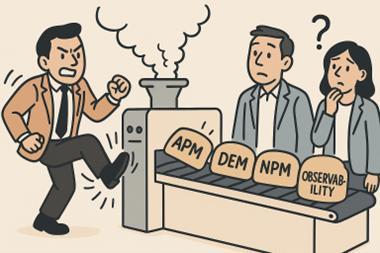
APM vs observability: why your definitions are broken

Recently I was asked to offer my opinions on Application Performance Management (APM) and Observability (o11y) - how they overlap, compete, and conflict. I was just one of several folks who's ideas were solicited, so (understandably) some of my thoughts were left out of the original article. HOWEVER, I'm never one to let good words (or at least a lot of words) go to waste, so I thought I'd pull them together here.

Semantic Caching: What We Measured, Why It Matters

Semantic caching promises to make AI systems faster and cheaper by reducing duplicate calls to large language models (LLMs). But what happens when it doesn’t work as expected? We built a test environment to find out. Through a caching system, we evaluated how semantically similar queries would behave. When the cache worked, response times were fast. When it didn’t, things got expensive. In fact, a single semantic cache miss increased latency by more than 2.5x.

Diagnosing Wi-Fi failures that traditional tools miss: a case study

A global airline experienced persistent Google Meet connectivity issues with no apparent network infrastructure faults. While their APM tool offered visibility into network paths, it didn’t surface any local anomalies. Catchpoint’s endpoint monitoring, however, revealed performance degradation specifically on Wi-Fi Channel 44 (5GHz band), where signal strength dropped to -80 dBm compared to optimal ranges of -30 to -50 dBm.

How SAP achieved world-class uptime through modern observability

SAP Customer Experience (CX) has undergone a remarkable transformation over recent years, evolving from fragmented monitoring to a scalable, automated observability powerhouse. In a recent fireside chat, Martin Norato Auer, SAP CX’s VP of Observability, shed light on the strategies, practices, and measurable impacts behind SAP’s SLA, uptime, and responsiveness achievements.

Cloudflare's Resolver Outage: More Than Just DNS

“It’s always DNS.” That’s the running joke in IT. When websites won’t load and apps grind to a halt, DNS—the internet’s address book—is often the first to get blamed. That’s because DNS translates human-friendly names like google.com into IP addresses that computers use to route traffic.

Here's the proof: What the fastest sites on the web have in common

60% of Gen Z won’t engage with a slow-loading website. In today’s digital economy, that’s a deal-breaker. Whether it’s a banking portal, a travel app, or an AI-powered SaaS platform, users expect performance. Instant loading, global reliability, and smooth interactivity aren’t just nice to have—they define the winners.

Observability isn't about the tool. It's about the truth

An enterprise client reports latency. Your dashboards say everything is fine. They blame you. You blame them. Nobody can prove it either way. This is where most monitoring efforts hit a wall. Too often, the conversation gets stuck on dashboards and tools instead of the one thing that really matters: truth. Observability isn’t about collecting metrics or building pretty dashboards.

Escalating risk, shrinking margins: The 2025 Internet Resilience Report

When we first launched Catchpoint’s Internet Resilience Report back in 2024, we were already seeing troubling cracks in the digital foundations of major businesses. Remember the CrowdStrike outage? Fast-forward to this year, and it's clear the stakes have only gotten higher. Google Cloud’s recent outage is yet another reminder of how tightly interwoven the Internet is and how all it takes is for one major player to go down, for thousands of businesses to be affected worldwide.

From the source to the edge: the six agent types you can't ignore

Recently, Catchpoint expanded our Global Agent Network to over 3,000 agents. In a crowded space, this is by far one of our key differentiators. At the time of writing, no one else boasts 395 providers in 105 countries and 346 cities. As Director of ISP Strategy, I’m not here to pat myself on the back—my real question is: why?