

Operations | Monitoring | ITSM | DevOps | Cloud

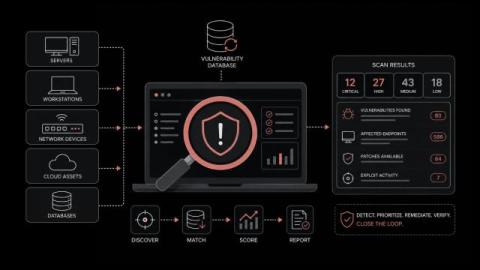
What Is a Vulnerability Scan? How It Works and What the Results Mean

How many machines in your environment are running software with a publicly documented security flaw right now? That figure comes from an asset inventory, and asset records age quickly once they are written. The gap is rarely about tooling budgets. Software inventory across a few hundred endpoints shifts every week, while the published catalogue of flaws in that software grows every single day. Manual inspection loses that race inside the first month.
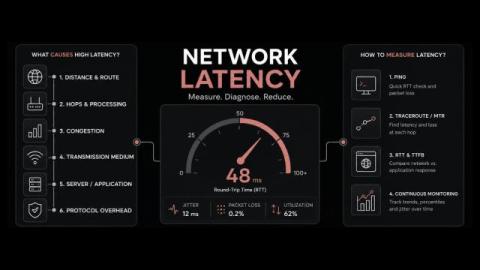
What Is Network Latency? Causes, How to Measure It, and Ways to Reduce It

Slow application complaints are among the hardest tickets in IT to close. The network gets blamed first; the dashboard shows nothing wrong, and the ticket bounces between teams for a week. Network latency sits at the centre of that argument more often than any other metric. Most dashboards report latency as a single average, and that average hides the slow requests people actually notice. A path can average 30 ms and still drop a call every ten minutes.

Unified Endpoint Management: Capabilities, Rollout, and Metrics

How much of your device inventory could you verify today without opening more than one console? Most IT teams can report what they purchased. Far fewer can say which of those machines are patched, encrypted, running approved software, and still checking in, because that answer spans several systems. Unified endpoint management consolidates those systems into one. Most IT teams inherit that split one platform at a time.

How SD-WAN Works and What to Monitor at Every Branch

Why does one branch report unusable voice and video every afternoon while the WAN dashboard at head office shows every site green? Most network teams have fielded that escalation. The device responds, the tunnel status reads up, and application performance is still unacceptable. SD-WAN was built for the distance between a connection that responds and an application that performs.

What Is Attack Surface Management and How Does Patching Reduce It?

Your exposure list grows faster than your team can clear it. Security adds new findings every week, and your IT team gets to a fraction of them. Everything left over is a backlog an attacker can walk straight through, and buying another scanner will not shrink it. Most attack surface management programs live inside that gap. Finding exposures got easy. Closing them did not, and a queue nobody has time to work is where the risk quietly builds.

Best Anomaly Detection Software: 9 Tools Compared on Cost and Coverage

Does the anomaly you need to catch show up in infrastructure, in security logs, in a data pipeline, or in a revenue figure? If you already know the answer, you probably learned it from an incident. A service degraded quietly, nobody got paged, and the post-mortem showed the signal had been in the data for hours. The thresholds were set correctly, and they still could not separate a busy Tuesday from a failure.

10 Best IT Operations Management Tools (ITOM) Compared for 2026

No IT team sets out to run ten monitoring tools. It happens one purchase at a time. You add a network monitor after one outage, a server monitoring tool after the next, then a log analyzer, then an APM product when the app team gets tired of guessing. Then something breaks, and every one of those tools has an opinion. Each fires its own alerts. None of them agrees on the cause, and the first hour of the incident goes to deciding which screen to believe.

9 Best Log File Analysis Tools for IT and DevOps Teams

An incident is open and the evidence is scattered. The application logs point to a connection timeout; the load balancer shows nothing unusual, and the container that produced the original error was replaced eighteen minutes ago. Three engineers are logged into three separate hosts running the same search, and the log line that would explain it has already rotated away. That is the moment most teams start shopping for a log file analysis platform.

How to Choose the Right Infrastructure Monitoring Tool

A production service degrades, and one question decides the next hour: is it the server, the network, or a cloud dependency? Each layer usually reports into a separate console, so pinning down the answer can absorb an hour the business would rather not lose. The right infrastructure monitoring tool is what turns that hour into minutes. On paper, most monitoring platforms look identical. Each one promises full-stack visibility and shows a polished dashboard.

Post-Quantum Cryptography and How to Prepare Your Organization

Do you actually know where encryption lives inside your infrastructure? Not the vendor's answer. The full map: every TLS handshake, every signed software update, every VPN tunnel, every certificate your systems trust. That map is where post-quantum cryptography starts to matter. The technology has moved from a research topic into a compliance deadline, and the algorithms protecting your data today were built for a world without quantum computers.