Zapier automation using our latest integration
Sometimes you need tools to manage your tools. If Zapier is your tool of choice, you can now add your Uptrends alerting as one of those tools ready for automation with Zapier.


Sometimes you need tools to manage your tools. If Zapier is your tool of choice, you can now add your Uptrends alerting as one of those tools ready for automation with Zapier.
One highly requested feature of AWS’s Application Load Balancer is the ability to assign static IP addresses. Unfortunately, ALBs do not support this feature and it is unlikely they will in the near future. Today, the only way to achieve static IP addresses for your application behind an ALB is to add another layer in between the client and your ALB which does have a static IP address, and then forward requests to your ALB.
If you’ve ever used Ruby on Rails, you’ve probably come across the concept of concerns. Whenever you jumpstart a new Rails project, you get a directory app/controllers/concerns and app/models/concerns. But what are concerns? And why do people from the Rails community sometimes talk badly about them?
For many organizations, knowledge management is often considered a technology problem. This is why when they implement knowledge management, the execution is often rendered unsuccessful because the processes and the kind of articles that are created are too complicated for people to use. ITIL knowledge management is defined as the process of capturing, processing, storing, and sharing knowledge across the enterprise.
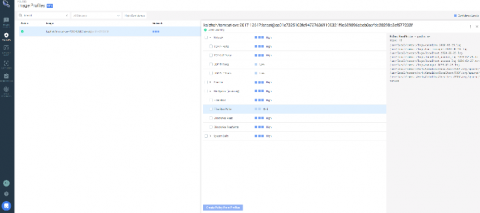
Discover how Kube-apparmor-manager can help you manage AppArmor profiles on Kubernetes to reduce the attack surface of your cluster. AppArmor is a Linux kernel security module that supplements the standard Linux user and group-based permissions to confine programs to a limited set of resources. AppArmor can be configured for any application to reduce its potential attack surface and provide greater in-depth defense.
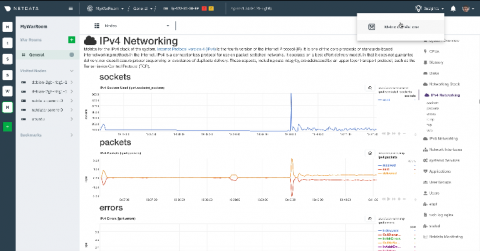
When an incident strikes, and every minute spent on root cause analysis delays the time to resolution, the real-world consequences can be dire. Troubleshooting an event requires a certain data set: every metric, at the greatest granularity, in one place, available in real time. Limits on the number or type of metrics, collection frequency, or time to visualization can mean the difference between timely resolution and unacceptable losses in time, money, and productivity.
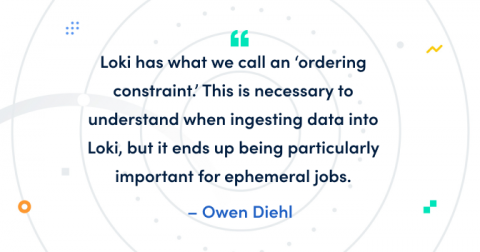
There are so many great things that can be said about Loki – I recently wrote about them here. But today, I want to talk about something technical that has been difficult for Loki users, and how we might make it easier: using Loki for short-lived services. Historically, one of Loki’s blind spots is ingesting logs from infrastructure you don’t control, because you can’t co-locate a forwarding agent like promtail with your application logs.
On September 14, CVE-2020-14386 was reported as a “high” severity threat. This CVE is a kernel security vulnerability that enables an unprivileged local process to gain root access to the system. CVE-2020-14386 is a result of a bug found in the packet socket facility in the Linux kernel. It allows a bad actor to trigger a memory corruption that can be exploited to hijack data and resources and in the most severe case, completely take over the system.