When it comes to IT Services, their whole world revolves around offering technology solutions with support and management. For these companies, it has become important now, more than ever, to modernize their workspaces and make the shift with IT digitization to effectively manage complexities like maintenance, security, scalability and resilience. While digital transformation may sound great in theory, in practice, it presents some unique concerns for businesses.
Nothing’s worse than getting a call from the users that the network is down. Too often, IT lacks the visibility they need to get before performance issues arise, meaning you’re in the dark until a user or customer calls to complain. Once an outage happens, the clock is ticking. And the more time you take to understand and resolve the issue, the more it costs you: in terms of customer dissatisfaction, and also staff time & lost productivity.
As an IT leader, it’s important to step back, sometimes, and view what you can do better with your service desk. Because small issues and inefficiencies can easily add up to day-to-day chaos. In organizations where IT services are aligned with business objectives, they are more likely to make investments in new technologies like AI & ML. Periodic reviews will make sure that the alignment stays. Here we are going to look at some areas where putting efforts can yield significant result.
AI Ops is about enabling developers, program managers, service engineers, website reliability engineers etc. to efficiently build as well as run online services or applications at scale with AI & ML techniques. AI Ops is expected to help improve service quality. customer satisfaction, enhance technology productivity, and reduce cost. With hype all around the world regarding artificial intelligence, IT leaders are sceptical whether it will actually be useful to them or will it add to their costs.
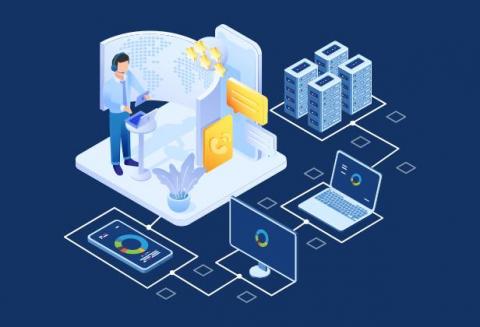
A service desk is the nerve center for all activities related to IT service delivery. It’s at the forefront of all interactions an organization has with its requesters. Implementing a service desk involves processes, workflows, and domain knowledge. That’s why most people stick to a framework when setting up a service desk. Learn more about the most popular ITSM framework. A service desk comes with numerous challenges that can be overcome if you are aware of the best practices.
Network management is undoubtedly crucial as there is a constant need to pin-point as well as fix the issues quickly whether it’s on premise or on cloud. The more complex and distributed a network becomes, the more alarms or alerts the system generates. Just knowing that something has gone wrong in your network is not enough, you should know the details like why it happened, when it happened, where it started, and what triggered it.
Service desk or IT teams are critical to organisations for ensuring business continuity and service delivery. Hence, it becomes important for IT organizations to use a slew of metrics to measure how efficient their service desk is. With the recent advancement in IT Service Management (ITSM), the reporting capabilities offer multiple KPI metrics that can be measured and monitored. So, with the increase in service desk metrics, it becomes even more difficult to zero down on which metrics to measure.
An IT service desk is an integral part of an organization’s IT operations. It’s relevant for entities of all sizes, and plays a key role in making sure that IT services meet key business objectives. In an organization, a service desk also acts as a catalyst for digital transformation, which is a major trend affecting almost every industry. In a recent report from Forturum, 41.4% of their respondents (companies) had a dedicated digital transformation team.
The blog talks about the drivers of software asset management (SAM) and why SAM needs to be included in your ITAM strategy.