Operations | Monitoring | ITSM | DevOps | Cloud

The latest News and Information on Containers, Kubernetes, Docker and related technologies.

How to Become a Faster and More Efficient Developer?

Nir Shtein, Software Engineer 6 min read March 30th, 2023 Komodor Tutorials As software developers, we always want to improve ourselves continuously. It can be through writing cleaner and more efficient code, using new design patterns, expanding our stack, or deep-diving into a specific technology. We strive to improve; we’re encouraged to do post-mortems with action items and to keep asking what went right and what went wrong.
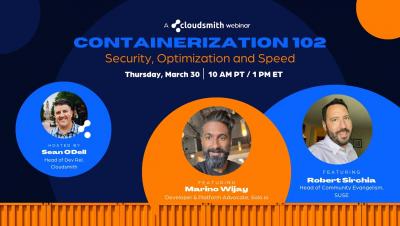
Containerization 102 Security Optimization and Speed

We continue our series on containerization in this session, diving a bit deeper to discuss the key areas to ensure container optimization and speed, such as: What are the security ramifications of containers? How have platforms enabled the rise of containers and microservices? What challenges have been introduced by containers and platforms? What are some of the enhancements to networking, and why this improves the speed of delivery

Supercharging Your Amazon Investment With EKS And CloudZero

Kubernetes has been described as everything from “awesome!” to “I regret my life choices,” and with 84% of all Kubernetes cloud workloads running on Amazon Web Services (AWS), it should come as no surprise that AWS created Amazon Elastic Kubernetes Service (EKS) to eliminate much of the undifferentiated heavy lifting it often takes to manage. What do companies like about Amazon EKS?

Overcoming the Challenges of Managing Testing Environments on AWS

Software developers need controlled and isolated environments to try new features, bug fixes, and other changes before deploying them to production. This separation captures possible issues early, reducing the risk of live environment errors or performance issues. Teams can experiment with various configurations, tools, and technologies in test environments, fostering innovation and development.

Comprehensive Kubernetes Observability with LogicMonitor's Kube-State-Metrics Integration

With the growing popularity of Kubernetes, the need for effective monitoring solutions has become crucial. LogicMonitor, a leading cloud-based monitoring and observability platform, has rolled out a new set of DataSources in its Kubernetes monitoring solution, LM Container, that uses data from the kube-state-metrics service to provide enhanced visibility into the state of Kubernetes objects.

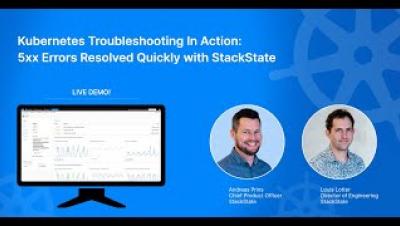
Kubernetes Troubleshooting In Action: 5xx Errors Resolved Faster

Troubleshooting applications in Kubernetes can be a daunting task but it doesn’t have to be that way. Let us show you how — starting with a live demo of how to solve 5xx HTTP errors quickly and easily. Watch this webinar to see how StackState's troubleshooting solution can give you the guidance you need to easily remediate those troublesome errors and many other issues you are likely facing in your Kubernetes applications and services.

Redis on Cycle: Configuration and Deployment

Redis is a powerful in-memory data store thats blazing fast. It's performant, scalable, supports a wide range of data structures, has built in caching mechanisms, and is simple to set up for Cycle users. This post will take you from deploying your first Redis instance on Cycle, through deploying highly available, stateful Redis instances that are monitored by Redis Sentinel. The companion repo for this article with configuration files and settings can be found here.

Monitor Calico with Datadog

Calico is a versatile networking and security solution that features a plugable dataplane architecture. It supports various technologies, including Iptables, eBPF, Host Network Service (HNS for Windows), and Vector Packet Processing (VPP) for containers, virtual machines, and bare-metal workloads. Users can employ Calico’s network security policies to restrict traffic to and from specific clusters handling customer data and to quickly block malicious IP addresses during external attacks.