The latest News and Information on Containers, Kubernetes, Docker and related technologies.
AWS (Amazon Web Services) is an amazing and reliable cloud service provider. AWS, like Google Cloud Platform and Microsoft Azure, provides everything you need to host an application without having to worry about running the underlying servers and network configuration. Everything you need to quickly begin hosting is provided as a packaged services.
In this blog post, you will learn how to setup image scanning with Github Actions using Sysdig Secure DevOps Platform. We will create a basic workflow to perform a local scan to detect vulnerabilities and bad practices before the image is pushed to any registry. We will also customize scanning policies to stop the build according to a set of defined rules.
AWS (Amazon Web Services) is an amazing and reliable cloud service provider. AWS, like Google Cloud Platform and Microsoft Azure, provides everything you need to host an application without having to worry about running the underlying servers and network configuration. Everything you need to quickly begin hosting is provided as a packaged services.
DevOps teams are increasingly looking toward Kubernetes as a scalable and effective way to package application containers of all sorts.. However, while Docker and Kubernetes have paved the way for the container and microservices revolution, there is still plenty of room for innovation. The strength of the Kubernetes tool lies in its ability to blend the simplicity of Platform as a Service with the stability of Infrastructure as a Service software.
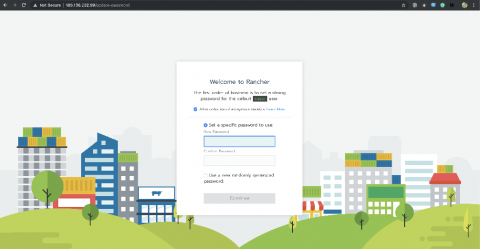
Rancher is a single point of control to manage all your kubernetes clusters anywhere. Rancher 2.3.x was released a few weeks back and it came with huge updates. Top Features included Istio and Windows nodes support. In this article, we will mainly discuss Istio support offered out of the box through the Rancher UI, see an example deployment, and visualize it via the Kiali dashboard.
In part 1 of the GitOps blog series, we discussed the value of using GitOps for Calico policies, and how to roll out such a framework. In this second part of the series, we will expand the scope to include decentralized deployment and GitOps.