The latest News and Information on Containers, Kubernetes, Docker and related technologies.
AWS security is an ongoing battle that you must address during every release, every change, and every CVE. When you’re first launching your production application, it’s impossible to check all the boxes; you simply don’t have the time. Until your application gets more adoption, you only have the time to do the bare essentials of security.
A few weeks ago, we announced that Sysdig is offering fully compatible Prometheus monitoring at scale for our customers, as well as a new website called PromCat.io hosting a curated repository of Prometheus exporters, dashboards and alerts. This got me thinking about how we were actually able to implement the changes necessary to offer this in our platform.
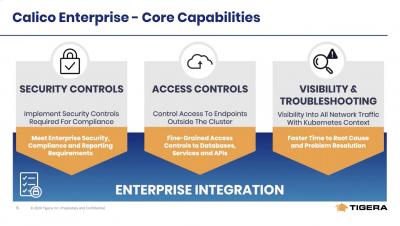
As our enterprise customers build out large, multi-cluster Kubernetes environments, they are encountering an entirely new set of security challenges, requiring solutions that operate at scale and can be deployed both on-premises and across multiple clouds.
At the end of October 2017, Microsoft announced the release of Azure Kubernetes Service (AKS), its hosted version of Kubernetes. If you’re new to AKS and curious about how to get a proof of concept (PoC) set up in your environment, read on. In this AKS tutorial, you’re going to learn, step-by-step, how to get an Azure Kubernetes cluster built with AKS.