The latest News and Information on Containers, Kubernetes, Docker and related technologies.
In our series on how to deploy an app to AWS with the least effort, we've talked about getting started, preventive measures, and securing your app. Today, we're going to focus on DNS (domain name system), specifically the AWS DNS service Route 53. As you're deploying your web app, you will inevitably use DNS.
Kubernetes is hugely popular and growing, and is primarily used on the cloud — 83 percent of organizations included in a large CNCF survey said they run Kubernetes on at least one public cloud. Amazon is a natural option for Kubernetes clusters, due to its mature and robust infrastructure, and a variety of deployment options with a varying degree of automation.
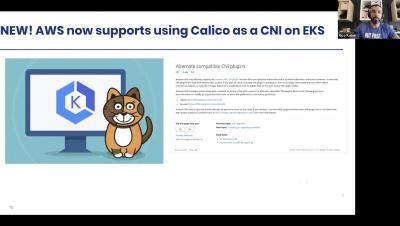
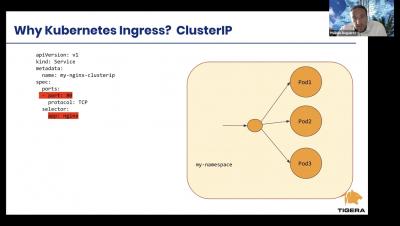
Welcome to the May 2020 edition of Calicomm! – our monthly newsletter for customers and partners. In the April edition, we discussed audit logs. This edition covers egress access control, which is an important aspect of micro-segmentation.
The Kubernetes framework has become the leading orchestration platform. Originally developed by Google, Kubernetes is a "platform for automating deployment, scaling, and operations of application containers across clusters of hosts" * . The kubernetes platform is used in all Cloud platform provider vendors as a tool that allows orchestration, automation and provision of applications and specific needs computing clusters and services.
Whether you’re a developer debugging an application or on the DevOps team monitoring applications across several production clusters, logs are the lifeblood of the IT organization. And if you run on top of Google Kubernetes Engine (GKE), you can use Cloud Logging, one of the many services integrated into GKE, to find that useful information. Cloud Logging, and its companion tool Cloud Monitoring, are full featured products that are both deeply integrated into GKE.
Hello, In this Newsletter, we're happy to introduce some updates: Custom domain, dotenv file, CLI improvements, and new resources.
As more environments run on Kubernetes—including our own— Datadog has been making it easier to get visibility into clusters of any scale. To minimize load on the Kubernetes API server, the Datadog Agent runs in two different modes. The node-based Agent queries local containers or external endpoints for data, while the Cluster Agent fetches cluster-level metadata from the API server.