Operations | Monitoring | ITSM | DevOps | Cloud

The latest News and Information on Containers, Kubernetes, Docker and related technologies.

Watchdog surfaces root cause insights and Kubernetes anomalies

Since 2018, Watchdog has provided automatic anomaly detection to notify you of performance issues in your applications. Earlier this year, we introduced Watchdog for Infra, enhancing Watchdog to also monitor your infrastructure. We’re pleased to announce the latest enhancements to Watchdog, which now provides more visibility and greater context around the full scope of each application issue.

Introducing RancherD: A Simpler Tool for Deploying Rancher

As part of Rancher 2.5, we are excited to introduce a new, simpler way to install Rancher called RancherD. RancherD is a single binary you can launch on a host to bring up a Kubernetes cluster bundled with a deployment of Rancher itself. This means you just have one thing to manage: RancherD. Configuration and upgrading are no longer two-step processes where you first have to deal with the underlying Kubernetes cluster and then deal with the Rancher deployment.

Rancher 2.5 Delivers Enhanced Full Lifecycle Management of EKS Clusters

Amazon EKS is the most popular managed Kubernetes solution. DevOps teams can quickly spin up clusters in the cloud and get started with Kubernetes in a few clicks. As organizations embrace Kubernetes in the cloud, the challenge becomes managing clusters across multiple regions or accounts. At that point, organizations struggle to visualize all of their clusters.

Rancher 2.5 Delivers On "Computing Everywhere" Strategy

Despite the lockdown restrictions of the last six months, I'm delighted to announce that we've released Rancher 2.5 on schedule today. This latest release represents another major milestone of Rancher's "Computing Everywhere" strategy by delivering management capabilities that match the extraordinary popularity of Amazon EKS and our lightweight Kubernetes distribution, K3s.

Rancher 2.5 Embraces GitOps at Scale with Rancher Continuous Delivery

The ability of Kubernetes to easily deploy and manage containerized software has given organizations tremendous capabilities in their cloud services, with clusters multiplying into the hundreds or thousands and extending out to the edge for any number of purposes. But its growing popularity has also led to challenges in managing complexity in an environment that is conducive to cluster sprawl.

Calico and K8s Network Policies - An Overview and Comparison

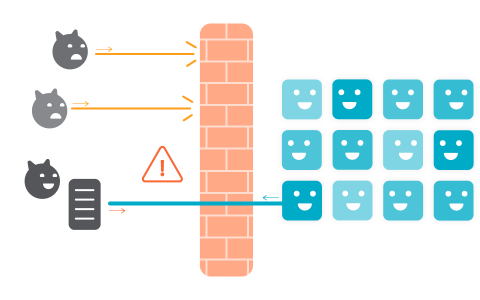
In an age where attackers are becoming more and more sophisticated, network security as a line of defense is more important than ever. Network Policy is the primary tool for securing a Kubernetes network. It allows you to easily restrict the network traffic in your cluster so only the traffic that you want to flow is allowed. In this training session, we will go over the core concepts in Kubernetes Network Policies and Calico Network Policies. Compare and contrast between the two models, and highlight when to use one versus the other.

What The Heck Is Continuous Integration (CI), Delivery (CD), And Deployment (CDP)?

CI and CD tools are popular for a good reason. They help us automate the application lifecycle, fully or partially. However, the problem is that, in some cases, we are moving away from the core principles behind the CI and CD processes. Products on the market tend to “bend” the definitions of what CI and CD are so that their products can get “yet another sticker”. This is an attempt to bring sanity into the insane situation in which everything and nothing are CI and CD.

Tracking Kubernetes Spend With CloudZero in 3 Easy Steps

If you are looking to account for your container costs and understand how your AWS Kubernetes or EKS cluster spend maps onto your workloads, this guide was made for you! In this post we will walk through the steps to get up and running with CloudZero and Amazon Container Insights fast. CloudZero has integrated with Amazon CloudWatch Container Insights for its strength as a secure and automated solution for sharing container metrics within AWS.

Rethinking Ops

Looking back at my years working with infrastructure and going through it’s changes, I believe its time we start to rethink Operations because clearly this model of Ops as cluster or infrastructure admins does not scale. Developers will always out-demand their capacity to supply. Either your headcount is out of control or your ability to innovate and deliver is severely hamstrung. Operations becomes this interrupt-driven thing where we’re just fighting fires as they happen.