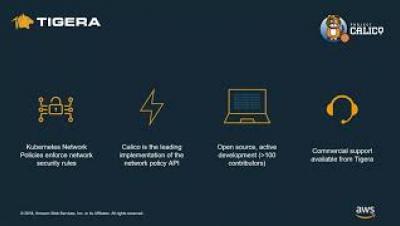
Self-Service Network Security for Kubernetes
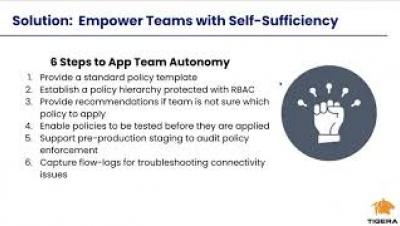
Learn how to empower your team with safe self-service network security for Kubernetes with Calico Enterprise.


The latest News and Information on Containers, Kubernetes, Docker and related technologies.
Canonical today announced full enterprise support for Kubernetes 1.19 spanning from public cloud to the edge, covering Charmed Kubernetes, MicroK8s and kubeadm. “As with all releases, Canonical is committed to fast following so that users benefit from the latest features, lifecycle operations and enterprise support in line with the upstream. With Kubernetes 1.19, MicroK8s and Charmed Kubernetes also bring enhanced security and carrier grade features.
So you’ve got a shiny new Kubernetes cluster up and it’s a dream. Deploying code is easy, scaling is a breeze, and you’ve never felt so efficient. However, despite claims that Kubernetes is self-healing, there’s still a nagging feeling in the back of your mind that wants to make sure your cluster is running smoothly. Just like any other tool, you need a monitoring solution to give you insight into Kubernetes.
Organizations are turning in droves to Prometheus to monitor their container and microservice estates, but larger companies often run headlong into a wall: They face scaling challenges when they move beyond a handful of apps.
As the cloud-native ecosystem continues to evolve, many alternative solutions are popping-up, that challenges the status quo of application deployment methodologies. One of these solutions that is quickly gaining traction is Unikernels, which are executable images that can run natively on a hypervisor without the need for a separate operating system.
Kubernetes upgrades are always a tough undertaking when your clusters are running smoothly. Upgrades are necessary as every three months, Kubernetes releases a new version. If you do not upgrade your Kubernetes clusters, within a year, you can fall far behind. Rancher has always focused on solving problems, and they are at it again with a new open source project called System Upgrade Controller. In this tutorial, we will see how to upgrade a K3s Kubernetes cluster using System Upgrade Controller.
In this blog post, we are going to explain how to monitor Harbor container registry with Prometheus metrics. Harbor is an open-source container registry, originally developed by VMware and now under the CNCF umbrella. Although many of us typically use hosted container registries such as DockerHub, Quay, ECR, GCR, or ACR, when you need a self-hosted registry, Harbor is a great choice. Harbor provides great features such as RBAC, replication, and image scanning.