Operations | Monitoring | ITSM | DevOps | Cloud

The latest News and Information on Continuous Integration and Development, and related technologies.

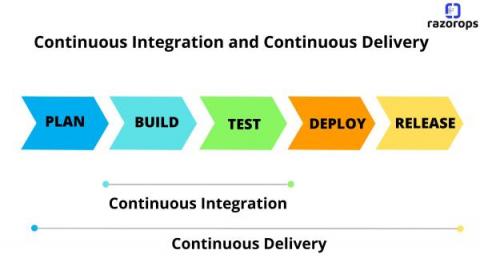
What is Continuous Integration and Continuous Delivery?

Continuous integration is a DevOps practice, where developers continuously integrate the code changes into a central repository. It most often refers to the build or the integration stage of the software release process. A continuous integration service helps to automatically build and run unit tests on the new code changes to find any errors instantly.
What is Continuous Integration (CI) - Best Practices, Benefits of CI, Tools

Continuous integration (CI) is a development practice where development teams can make small, frequent changes to code. With an automated build which verified the code each time developers verify their changes into the version control repository. Which helps the development teams to detect any defect in an early stage. Continuous integration is the first part of CI/CD, which enables the development team to release the code changes gradually to production quickly and regularly.

Application logging with Flask

Without logs, or a good understanding of them, debugging an application or looking through an error stack trace can be challenging. Luckily, Flask logging can change the way you understand debugging and how you interact with logs produced by the application. The Flask logging module gives you a way to record errors over different severity levels. A default logging module is included in the Python standard library, and it provides both simple and advanced logging functions.

Announcing support for Windows runners in Bitbucket Pipelines

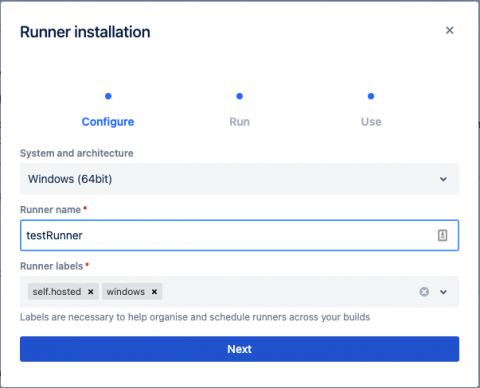
We are happy to announce that Bitbucket Pipelines now supports self-hosted runners on Windows. You can create a self-hosted runner and run it on your Windows infrastructure to run builds with the.Net framework. Since you're using your own runner, you won’t be charged for any Bitbucket Pipelines build minutes. This self-hosted runner will be non-containerized, allowing your CI/CD step to access the host’s hardware, such as the graphics card or any connected external devices.

Deploying K3s with Ansible

There are many different ways to run a Kubernetes cluster, from setting everything up manually to using a lightweight distribution like K3s. K3s is a Kubernetes distribution built for IoT and edge computing and is excellent for running on low-powered devices like Raspberry Pis. However, you aren’t limited to running it on low-powered hardware; it can be used for anything from a Homelab up to a Production cluster.

How to write optimized & secure docker file to create docker images

How to write optimized and secure docker file to create docker image. Learn the simplest approach to Docker images and how to use them using a Docker repository, such as Docker Hub, or hosting your own private repository. What you will learn from this video: What is docker? How to write a docker file? How to write an optimized docker file? How to write a secure docker file? What about the docker repository? How to put or host docker images?

Incident response: leadership & psychological safety with Jeli founder Nora Jones

Incident response can tricky. How do you create a culture prepared to handle it in a healthy and efficient way? What should and shouldn't leaders be involved in? How do you create a psychologically safe environment? Find out in this episode as Rob as he interviews Jeli founder Nora Jones on the do's and don'ts of incident response.