Operations | Monitoring | ITSM | DevOps | Cloud

Comprehensive Browser Monitoring for Modern Web Apps: Mastering API & SPA Performance

Modern websites and applications are no longer simple HTML pages. As applications evolve into sophisticated single-page applications (SPAs) built with frameworks like React and Vue and rely heavily on API-driven architectures, the need for advanced browser monitoring has never been more critical.


Why Browser Monitoring Is Essential for Early Outage Detection in Multi-Cloud Environments

Businesses are quickly adopting multi-cloud because they can use AWS, Google Cloud, Azure, and other cloud providers at the same time to make their systems more reliable, scalable, and effective. This distributed strategy gives more freedom and makes it less dependent on vendors, but it also makes things more complex and maximizes the chance of outages, which are hard to identify. In multi-cloud settings, failures do not necessarily indicate that everything stops functioning.

Protecting PII in Synthetic Monitoring: How to Monitor Safely

Synthetic monitoring feels like the safest layer in the observability stack. It uses artificial users. It runs scripted journeys. It never touches real customer accounts. Yet this is exactly why many teams overlook the privacy exposure hidden inside it. Synthetic tests often produce screenshots, network captures, HTML snapshots, console logs, authentication artifacts or even short screencasts.

The Role of Browser Monitoring in E-Commerce Conversion Optimization

In today’s hyper-competitive e-commerce environment, customers expect websites to be fast, responsive, and error-free. Even a few seconds of delay can lead to abandoned carts, lost revenue, and poor user experience. With more shoppers browsing on mobile devices and expecting real-time interaction, performance optimization has become a key driver of conversion growth.

Transaction Monitoring Software for for businesses and financial institutions

In today’s digital financial landscape, transaction monitoring software has become essential for businesses and financial institutions aiming to prevent fraud, money laundering, and other illicit activities. A transaction monitoring tool automatically tracks and analyzes financial transactions in real time, using predefined rules, algorithms, and AI-driven analytics to detect suspicious behavior.

The Complete Guide to Solving HTTP Server and HTTPS Transaction Monitoring Challenges

In today’s digital-first world, website uptime, speed, and security directly influence user experience and business success. Whether you’re managing an enterprise web application, a SaaS platform, or a multi-region eCommerce site, HTTP and HTTPS monitoring is non-negotiable. However, DevOps teams often face complex challenges—ranging from inconsistent server response times to SSL/TLS misconfigurations and broken transactions.

SaaS Monitoring Best Practices

SaaS Monitoring is the process of continuously tracking the performance, availability, and reliability of Software-as-a-Service (SaaS) applications to ensure they operate efficiently and deliver the best possible user experience. In an era where organizations depend heavily on cloud-based tools for communication, project management, and analytics, maintaining optimal SaaS performance is more critical than ever.

What Is Voice over Internet Protocol (VoIP) Monitoring?

Voice over Internet Protocol (VoIP) has transformed business communication by enabling voice calls over the Internet rather than traditional phone lines. While VoIP provides flexibility and cost savings, call quality can be affected by network issues such as latency, jitter, and packet loss. VoIP monitoring is the process of tracking and analyzing the performance of your VoIP system to ensure smooth, clear, and reliable voice communication.

A comprehensive Guide for Synthetic Transaction Monitoring

Synthetic Transaction Monitoring is a technique that uses automated scripts to simulate user activities on an application to test performance and functionality. By using automated scripts, it creates fake transactions such as logging in, searching for a product, or completing a purchase without requiring real users. These transactions are executed regularly from various locations to ensure the application is performing smoothly and as expected, even during off-peak hours.

What Is Infrastructure Monitoring? - Dotcom-Monitor

In today’s always-on digital world, the health of your IT infrastructure directly impacts business performance and customer satisfaction. Even a few minutes of downtime can result in lost revenue, broken user trust, and costly disruptions. As organizations increasingly adopt hybrid and cloud-native architectures, keeping track of every server, database, container, and network component has become more complex and more critical than ever.

Synthetic Monitoring for ServiceNow: Tables, Rules & Endpoints

ServiceNow is one of those platforms that looks simple from the outside but turns into a labyrinth the moment an organization starts customizing it. What begins as a service catalog or an HR portal quickly evolves into a tangle of custom tables, UI policies, business rules, Flow Designer actions, and scripted REST endpoints. None of this is bad. In fact, it’s the whole reason companies choose ServiceNow: you can build anything.

How to Choose the Best Synthetic Monitoring Solutions & Software

To have a fast and reliable experience digitally you would need to do more than resolving issues. This is why people prefer synthetic monitoring which simulates real user actions with regular intervals. Using this method, businesses can detect performance shortcomings and any technical issues. From testing website load to full flow checkout, everything can be tested before users face any issues.

Synthetic Monitoring for Internal Applications: SAP, ERP & More

Modern IT teams know the story by heart: uptime dashboards look green, the public website is fast, yet somewhere inside the corporate network, the finance team can’t submit purchase orders and the factory floor’s ERP terminals are frozen. What broke isn’t the internet—it’s the internal backbone. These internal systems—SAP, Oracle, Microsoft Dynamics, homegrown ERPs, HR and payroll platforms—keep the business running.

What Is Synthetic Monitoring?

Synthetic Monitoring is a proactive approach to testing a website or web server to ensure that digital services stay available, responsive, and functional at all times. Instead of waiting for real users to encounter a problem, synthetic monitoring uses automated scripts to imitate user interaction, such as visiting pages, submitting forms, or performing transactions from multiple global locations.

Salesforce API Monitoring: Synthetic Tests That Catch Failures

Salesforce APIs sit quietly behind countless customer interactions. They connect CRMs to billing, sync leads to marketing, and power dashboards that executives depend on daily. Yet when one of those APIs slows down or breaks, it often happens without alarms. Dashboards still load, integrations keep attempting retries, and somewhere data silently stops flowing. That’s the danger of invisible API failure—by the time someone notices, the damage has already been done.

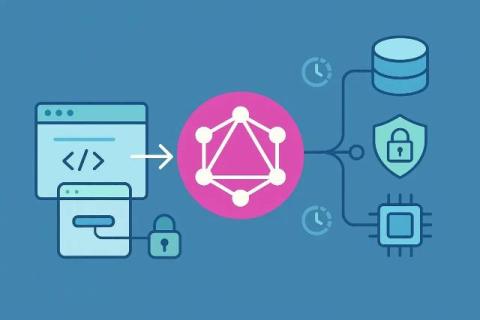
Synthetic Monitoring for GraphQL Endpoints: Beyond the Query

GraphQL isn’t just another API protocol—it’s a new layer of abstraction. It collapsed dozens of REST endpoints into one flexible interface where clients decide what data to fetch and how deep to go. That freedom is a gift for front-end teams and a headache for anyone tasked with reliability. Traditional monitoring doesn’t work here. A REST endpoint can be pinged for uptime.

Everything You Need to Know About the SSL Certificate Monitoring

In today’s hyper-connected world, website security is not optional. It is the foundation of the digital trust. Whether you run an e-commerce store, manage a SaaS platform, or operate a corporate platform, your online presence matters a lot. For all this, your online presence depends on the SSL certificates to encrypt sensitive data and authenticate your identity. However, too many organizations treat SSL certificates as a “Set-and-forget” task.