Operations | Monitoring | ITSM | DevOps | Cloud

InfluxDB Cloud Native Collectors, Enterprise and Industrial IoT Examples - Part 1

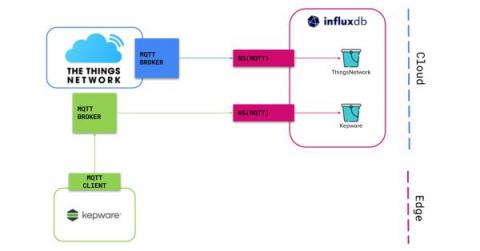
Learn how to deploy InfluxDB Cloud’s Native Collectors with Kepware and The Things Network. Did you hear about the new feature that just dropped to InfluxDB Cloud? Native Collectors! Starting with MQTT. There will be plenty of content to get you started with Native Collectors. So this blog series covers connecting two popular IoT-based platforms to InfluxDB Cloud using native Collectors. One Enterprise use case and one industrial use case.

Augmenting APM with InfluxDB for Faster Issue Resolution

An enterprise IT company hosted a large industry event that drew attendees from all around the globe, including key technology leaders. Organizers knew that their IT offerings needed to be top notch to ensure attendees were happy when it came to event experience. The event application allowed attendees to browse and register for sessions at the event. So, organizers needed to be able to identify issues in real-time and fix them quickly.

Getting started with the Node.js client library in InfluxDB

If you use Node.js, then the Node.js client library allows you to interact with the InfluxDB platform quickly, using a familiar language. Here, Zoe Steinkamp discusses some of the features of the Node.js client library to help you get started building awesome applications with InfluxDB even faster.

The 5Ws (and 1H) of InfluxDB's Native MQTT Collector

MQTT is a messaging protocol used widely in the IoT space. Its publish/subscribe model is ideal for IoT because multiple devices can send data to a single MQTT broker, which MQTT clients can then access. The MQTT integration for InfluxDB’s native collector feature is a fast and easy way to create cloud-to-cloud data pipelines. Here’s the lowdown on using the Native MQTT collector. Who: Users and companies that rely on MQTT to provide time series data for their applications.

August Monthly Product Update - InfluxDB Native Collectors, Improved Tasks, CLI Onboarding, and a New OSS Distribution

We love to write and ship code to help developers bring their ideas and projects to life. That’s why we’re constantly working on improving our product in sync with developer needs to ensure their happiness and accelerate Time To Awesome. This month is special. We have many features that we think you will love when onboarding or continuing to use InfluxDB. We launched Native Data Collectors this month.

Tools for Time Series Data Science Problems with InfluxDB

This article was originally published in The New Stack and is reposted here with permission. You might need to perform anomaly detection or forecasting if you’re working with time-series data. The first step before working on your time series is finding the right data store. To effectively detect or forecast your data, you will require a data store that can handle a large volume of data at a high ingest rate. Therefore, you might want to look at using a purpose-built time-series database.

The What, Why, and How of Time Series Databases

This article was written by Thamatam Vijay Kumar. Scroll down for author bio and photo. Modern-day websites are filled with dashboards featuring enriched charts, line graphs, radar as well as multigraphs. The world is fascinated with such charts and graphs, which deliver much value to millennial web applications. There are many such chart libraries which provide interactive visualization and deliver data insights for users. The charts plot the lines using data points.