Operations | Monitoring | ITSM | DevOps | Cloud

3 Defensive Programming Techniques for Rails

Incidents happen all the time because of bad code deploys. You write some code that passes code review, it then is automatically shipped to production after a test suite passes, and BAM, an outage happens. This fairly common occurrence has ways to prevent it entirely. Using some simple ideas we can defend ourselves from the hidden mistakes that code reviews and chaos engineering sometimes won’t catch.

Announcing Flare: Make opening incidents stress free

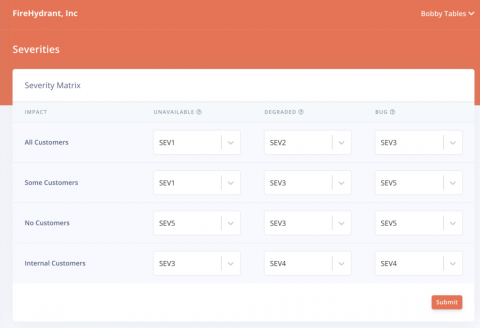
We’re launching a new feature today that allows anyone in your organization to kick off your incident response process with an appropriate severity level attached from Slack. Often people are afraid to open an incident or even share that they’re aware of something going wrong with your applications. When everything is important, nothing is important; users frequently overestimate the impact of an incident and assign an inappropriately high severity level.

So You Want To Give A Tech Talk?

So you’ve signed up to give a tech talk, awesome! You’re a subject matter expert in something and want to share you knowledge, that’s what helps make a community awesome. You’re going to be speaking in front of a room of people that you don’t know in a place you’ve likely never been, talking about something you confidently know. Sounds easy, right?

SLO, SLA, SLI Oh My! Creating them can be easy

Imagine you are driving a car on a freeway. Your speedometer is telling you you’re going 62 mph. But you “gotta go fast”. Faster than then 65 mph speed limit. So you go for it: first 68mph, then 75mph, then 80mph. Then you pass a police officer hiding in a speed trap. To your dismay, they pull you over and give you a ticket. All is not lost: there is a silver lining here.

Instrumenting Ruby on Rails with Prometheus

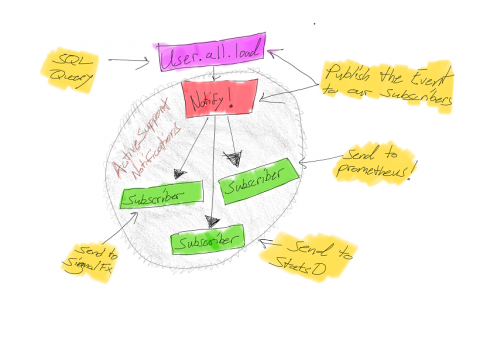
If you’re running a production application, you need metrics. There are great products out there that allow you to gain visibility into how your application is performing, give some nice graphs, and charge you for it. In the Rails community, this is commonly achieved by using NewRelic and Skylight. But for some of us, we achieve visibility by using Prometheus and Grafana that we build and host ourselves.

Understanding Istio Ingress

Istio is a hot technology right now. Giants such as Google and IBM have devoted entire teams of engineers to the project to push it to production readiness. Since 1.0 has been released recently, I wanted to write down some of the things that confused me coming from a strictly Kubernetes only world where we have Ingress controllers and Service load balancers and how Istio takes these same concepts but on stimulants.

Developing a Go app with Docker Compose

Writing Go applications in an isolated environment with Docker comes with some great advantages. You get a clean GOPATH, the bare essentials for developing, and you can easily change which Go version you’re developing against. In this quick tutorial, we’re going to show you how to structure a Go application with Docker Compose as your development environment.