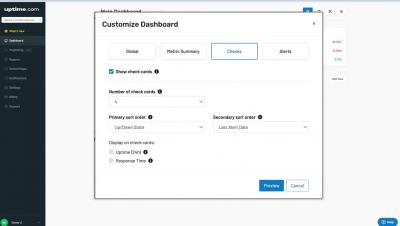
Eleven basic checks and one status page. That’s all you see when looking over the account usage of the Uptime.com account you are now managing for your company. When you logged in for the first time you saw a dashboard with cards and metrics, labeled with titles that don’t obviously connect to services you offer. Your first clicks were to navigate to view the subscription – maybe your plan details can give you some guidance. Does this sound like you?
Does the worst case scenario for your company include alert fatigue from false alarms? Maybe it should. No one likes a false positive when it comes to infrastructure monitoring, and false flags are especially irritating because you have to respond to a problem that doesn’t actually exist. Just how bad are false positives? Let’s break down what these annoying little mistakes add up to for your team. You might be surprised to learn just how much they are hurting your DevOps pipeline.
In the spirit of highlighting the importance of Status Pages and how they impact users, we gathered actual stories from various Uptime.com employees. A time in their lives where they landed on a company’s status page (outside of work) to investigate problems they were experiencing. Enjoy!
Change is inevitable in this world, and that includes your website. The best way to stay current with the latest trends and technology and meet all of your user experience, speed, performance, conversion, and optimization needs is through a website redesign. A well-designed website will be more user-friendly and conversion-optimized. On the other hand, a website that is not updated regularly can quickly become dated and lose its impact. A poorly designed website will do more harm than good.
For more information on our API check, view our support documentation: https://support.uptime.com/hc/en-us/articles/360019552700-API-Check-Use-Cases-and-Examples
Server load can tell you a lot about your day-to-day user traffic. A sudden spike in server traffic can indicate an attack, but that’s not always the case. As website and performance monitoring become more mainstream, and you add a wider variety of backend testing and web monitoring checks to your infrastructure – you have to ask the question – Is that spike in server traffic DDOS? Or is it me…
00:26 Web Checks
00:31 HTTP(S) Check
01:13 Transaction Check
01:45 API Check
02:38 RUM Check
03:12 Malware and Virus Checks
03:37 SSL Check
04:00 Network Checks
04:04 WHOIS/Domain Expiry Check
04:19 DNS Check
04:43 Ping (ICMP) Check
04:59 NTP Check
05:22 SSH Check
05:34 TCP/UDP Port Checks
05:54 Email Checks
05:59 IMAP, POP, SMTP and Domain Blacklist Checks
06:37 Custom Checks
We hear a lot of questions from folks taking their first steps into website monitoring about how the service works and what we offer. One of the more frequently asked questions is why they need us at all. After all, they have metrics from XYZ provider who can tell them if they have consumed too much bandwidth or are overloaded with traffic. Wouldn’t they just know that they were up or down by watching those metrics?
By now it’s no secret that system outages and website downtime are more widespread and frequent than ever. In fact, the frequency of outages jumped 9% in just the first week of 2022. This can be attributed to a rapid increase in traffic and reliance on tech infrastructures – resulting in connectivity, server, and other technical issues that are alternately unforeseen and unavoidable.