Operations | Monitoring | ITSM | DevOps | Cloud

SaaS, PaaS & IaaS: The Ultimate Guide To Cloud Service Models

The emergence of cloud computing. Arguably the biggest change in technology in decades, cloud computing changed how technology would now develop and how businesses and organizations would operate. Indeed, the enormous popularity of cloud services is due precisely to that: you can get different models depending on your operational needs. To properly utilize these cloud service models, you should understand the differences in their functional capabilities and the ideal use cases for each model.

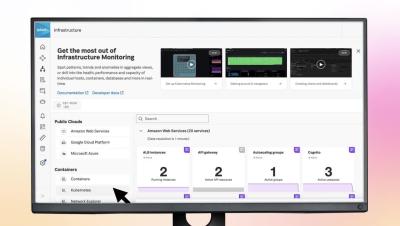
Caught in 4K! New Splunk Features Help Find Problems Faster With Full Visibility of Your Tech Stack

As environments have become more complex and digital user expectations are at an all-time high, organizations are under more pressure than ever to keep their digital systems secure and reliable. At Splunk, we’ve been hard at work building features that help ITOps and engineering teams thrive amid digital disruptions and build resilient systems.

Splunk Joins Cisco: Our Partner Ecosystems Just Got Even Stronger

What do you get when you combine the full power of the network with market-leading security and observability solutions? More customer value and an amazing partner ecosystem. It’s official! Today, with the closing of the acquisition, Splunk became part of Cisco. We’re looking forward to this exciting new chapter of our journey together – and it couldn’t have come at a better time.

APM Metrics: The Ultimate Guide

How your software applications perform is an extremely important factor in determining end-user satisfaction. APM metrics are the key indicators that help business-critical applications achieve peak performance. This article explains APM metrics, their importance, and the core APM metrics used by modern software systems to measure and optimize the performance of their applications.

Scalability in IT: The Complete Guide To Scaling

Somewhere in the IT multiverse, a perfect balance has been achieved between demand for IT services and installed system capacity. Unfortunately, that isn’t our world. IT systems operate in swing periods of idle capacity and overloads, as the ebb and flow of demand is influenced by various internal and external factors.

Continuous Data: The Complete Guide

Data is never just data. There are structured and unstructured data, qualitative and quantitative data. Among these varied types, continuous data stands out as a key player, especially in the quantitative realm. Continuous data, with its infinite possibilities and precision, captures the fluidity of the real world — from the microseconds of a website’s load time to the fluctuating bandwidth usage on a network.

TCP/IP: What It Is & How It Works

Network protocols are necessary for data transmission and networking over different devices. One of the most common protocols is the TCP/IP framework, which builds connections through our internet. In fact, if you check email, watch Netflix, or stream music from Spotify, you’re relying on TCP/IP in the background. In this article, you’ll learn about the TCP/IP protocol layers and how they function.

Top 5 Outcomes CIOs Need to Accomplish by 2025: Driving Business Value Through Technology

In January 2024, I published findings from some of my recent research as, “Top 5 Outcomes CIOs Need to Achieve by 2025: Driving Business Value Through Technology.” By focusing on these five key outcomes, CIOs can ensure that their technology investments directly contribute to business growth, resilience, and competitive advantage in the years leading up to 2025.