Operations | Monitoring | ITSM | DevOps | Cloud

Language AI to physical AI explained

What is physical AI? Physical AI embeds machine learning directly into hardware, enabling algorithms to interact, move, and perform autonomous tasks in the physical world. Traditionally, robots relied on precise, hardcoded coordinates; if an object shifted by a single millimeter, the entire system failed. Today, robotics is moving past rigid automation toward truly adaptive architecture. Neural networks help machines process raw sensor data in real time. Consequently, machines can dynamically reason through the unpredictable physical world.

Challenges designers face in open source (and how to fix them)

Open source software (OSS) is a cornerstone of modern technology. According to the Linux Foundation, it powers up to 90% of software tools used today. Unlike proprietary software, OSS is developed collaboratively, meaning its code is available for anyone to use, change, and distribute. Because OSS projects have historically been driven by developers, they tend to be highly flexible and functional, but they can lack critical usability considerations.

Canonical announces live kernel patching for Arm64

Canonical Livepatch now officially supports Arm64, further expanding its security patching automation capabilities. For the first time, Ubuntu on an Arm64 machine can apply critical kernel updates, without service interruption or rebooting. Starting with Ubuntu Core 26 for Arm64, and for Ubuntu Core 20 and onwards for AMD64 machines, a wider range of devices and cloud virtual machines can achieve timely vulnerability remediation through Canonical Livepatch.

Governing AI Agents at Runtime: Open Source Zero-Trust with AGT | Ubuntu Summit 26.04

AI agents are moving from demos to production – but who governs what they do at runtime? The Agent Governance Toolkit (AGT) is an open source, MIT-licensed framework from Microsoft that enforces deterministic policy before every tool call, message, and action an agent takes. In this talk, Imran walks through how AGT brings zero-trust identity, policy-as-code, tamper-evident Merkle audit chains, and a Kubernetes sidecar model to any AI agent, regardless of framework.

So you need to add microcontrollers to your fleet: now what?

Your Ubuntu Core fleet is running beautifully. OTA updates roll out in minutes. Every device is strictly confined, cryptographically attested, and carrying a 10 to 15 year long term support (LTS) commitment. The operational team sleeps soundly. Then the product roadmap meeting happens. The industrial floor needs vibration sensors on every motor. The smart building needs temperature nodes in every room. The cold chain system requires dozens of low-power Bluetooth tags. And someone just said the words.

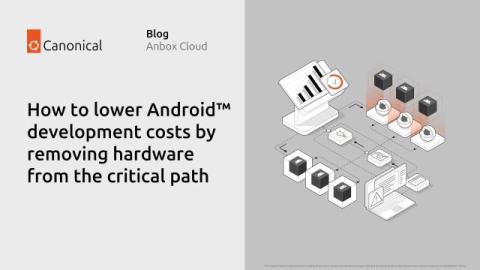
Scaling Android development with Anbox Cloud

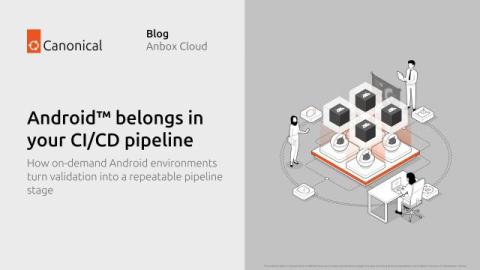
Discover how Anbox Cloud helps engineering teams scale Android development by moving Android workloads from physical hardware into the cloud. In this video, we showcase how developers can run, test, validate, and share Android environments on demand using containerized and virtualized Android instances. We explore how both approaches work, key differences, and use cases.

Validating real-world skills through Canonical Academy

In an increasingly volatile job market, standing out from the competition is vital. For many in the open source community, formal recognition for self-taught skills is a significant challenge. These skills are often built through hands-on hobbies, side projects, and deep community contributions. While the market is flooded with certificates and certifications, most fail to reliably measure practical execution, or fall behind the rapid pace of industry changes.

Template: Streamlining open source design contributions

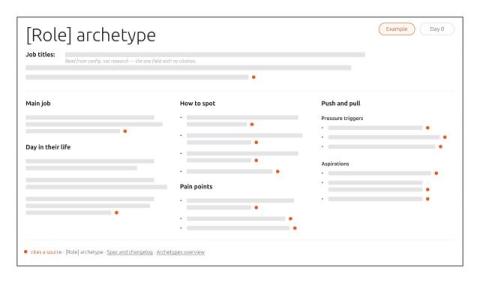
As designers working at Canonical, we’re always thinking about open source. We believe that encouraging more designers to contribute to open source benefits everyone, from the project maintainers to the end users themselves. In the 2025 edition of FOSSBackstage conference, we presented our research findings on why designers don’t get involved in open source projects and found a particular breakdown between designers and project maintainers.

Beyond Mythos: responding to a new threat landscape

Canonical’s security philosophy has always been built on the premise that vulnerabilities exist and will be discovered. Our response relies on defense-in-depth architecture, rapid patch deployment, and strict adherence to Coordinated Vulnerability Disclosure (CVD). AI changes vulnerability discovery volume and speed. We have a robust vulnerability management process that is backed by rigorous compliance certifications.

Closing remarks | Ubuntu Summit 26.04

The closing remark at the Ubuntu Summit reflects on two days of open source innovation and community milestone announcements. Save the dates for the next Ubuntu Summit: November 12-13, 2026! About Diogo Diogo Sousa is the Security Engineering Manager at Canonical. Ubuntu Summit 26.04 is a showcase for the innovative and the ambitious. Subscribe. Fuel your curiosity.