Operations | Monitoring | ITSM | DevOps | Cloud

AI Can't Prove Compliance by Itself

AI is moving fast, and it’s tempting to believe it can automate software governance end to end. But compliance and security aren’t probabilistic problems. They don’t accept “close enough.” They don’t accept summaries. They can’t tolerate hallucinations. Governance depends on facts. Irrefutable, provable evidence of how systems actually changed.

Governance Doesn't Stop at Deploy

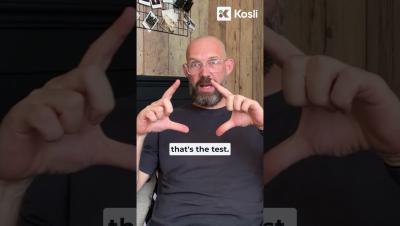
Most governance models focus on what happens before production. Approvals. Tickets. Change records. But software delivery doesn’t end at deploy. Runtime is where change management is validated. It’s where systems prove whether controls actually work and where risk becomes real. If governance stops at deployment, you’re not managing change. You’re managing intent. In this video, Mike Long (CEO & Co-founder, Kosli) explains why runtime is the true source of control, why approvals alone don’t reduce risk, and how modern teams build governance that reflects reality, not paperwork.

Evidence, Not Screenshots

In regulated environments, slow change is often blamed on process. In reality, it’s caused by missing, fragmented, or untrusted proof. Screenshots. Tickets. Manual approvals. Evidence assembled after the fact. In this video, we show what changes when compliance policies are embedded directly into release workflows — and when immutable, machine-readable evidence is captured automatically across CI/CD.

ServiceNow Without the Ticket Hell

ServiceNow is the system of record for change and approvals in most regulated enterprises. But when evidence lives elsewhere — scattered across CI tools, scanners, tickets, and screenshots — approvals slow down and audits become painful. Developers waste hours chasing proof. CABs approve changes without confidence. Auditors reconstruct history months later. In this video, Matt Bailey shows what changes when evidence is produced continuously, directly from the delivery pipeline, and linked into ServiceNow workflows.

Why Release Control Takes Weeks

The industry standard for release control is painfully manual: long-form policy documents, ServiceNow forms, human approvals, meetings, and tickets that take days or even weeks to close. In this video, Mike Long (CEO & Co-founder, Kosli) explains the difference between manual release control and an automated, zero-trust model where evidence is collected automatically, provenance identifies the artifact, and approvals can be fully codified.

Evidence as an Input

Evidence isn’t something you produce at the end — it’s something every control generates for the next one. In this video, Mike Long (CEO & Co-founder, Kosli) explains how vulnerability scans produce evidence tied to the artifact fingerprint and the policy file used, and how that evidence becomes an input to downstream controls like release approvals. This is the core of reusable, continuous compliance.

An Open SDLC Controls Framework for Financial Services

How can financial institutions align on software delivery governance without slowing down innovation? At FINOS OSFF New York 2025, Deutsche Bank and Morgan Stanley introduced the new SDLC Governance Working Group — an open collaboration under FINOS to create a Common Controls Catalogue for software delivery. Kosli's Mike Long helped form and participates this group, contributing expertise in continuous compliance automation and controls engineering to connect the engineering and policy communities.