Operations | Monitoring | ITSM | DevOps | Cloud

AI Model Drift: How to Keep Models Reliable

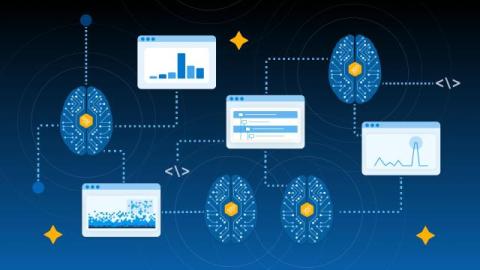
AI model drift is when an AI system's performance and accuracy degrades over time because the data, user behavior, or business environment has changed since the model was trained or evaluated. Even if latency, uptime, and infrastructure metrics remain healthy, model quality can quietly decline, leading to less accurate predictions, inconsistent responses, and reduced user trust.

Introducing AI BubbleUp

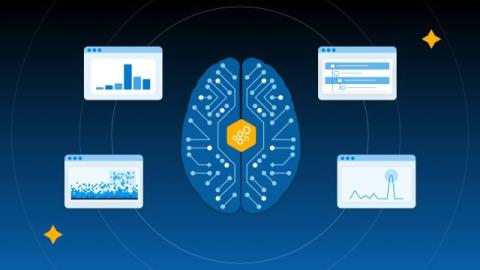
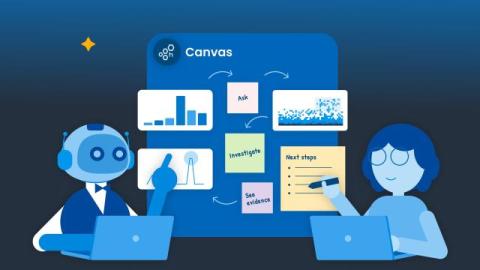
BubbleUp has always been the fastest way to figure out what a group of outliers have in common. Draw a box around a band of slow traces, a cluster of errors, or any set of events you're interested in, and BubbleUp compares that selection to the baseline across every dimension you've sent us. It's how Honeycomb users find the "unknown unknowns" that dashboards can’t show you.

AMA Recap: More Answers From the Observability Engineering Authors

Last week, we sat down with the authors of Observability Engineering for a live AMA. We ended up getting so many questions (pre-submitted and live) that we couldn't get through them all. Charity, Liz, George, and Austin kindly stuck around afterward to answer more, ranging from low-hanging observability fruits and telemetry to AI and what software engineers can do that Claude can't. Missed the live session? Watch it on demand now.

Spend More Time Talking to Humans

A few months ago, I noticed something happening. I would spend all day working with LLMs—prompting them, reviewing their work, and correcting them—and when I wasn’t working on my own code, I was reviewing LLM-generated code. By the end of the day, I was exhausted. This was a very unusual thing for me: I’ve been a software developer at startups for 30 years, and while sometimes I might have gotten stressed out, I had never been exhausted by the actual act of writing code.

Honeycomb Named a Visionary in the 2026 Gartner Magic Quadrant for Observability Platforms

For the third consecutive year, Honeycomb has been recognized for its Ability to Execute and Completeness of Vision, and we believe for its strong vision around fast, flexible, high-cardinality querying that helps engineers understand not just that something broke, but why. The software development lifecycle has collapsed. The neat sequence of plan, build, test, and ship that teams have relied on for 20 years is now happening in a single afternoon. AI writes a large share of the code.

Embracing the Code Review Bottleneck

Roughly a year ago, I left Honeycomb’s SRE team to join the newly formed Tenant team, which works on our Private Cloud offering. This team held some significant challenges on its roadmap if it wanted to demonstrate that the offering was possible, would be worth the cost, and could be done without representing a heavy tax on the rest of the organization.

30 to 70 PRs a Day: How We Managed to Not Wreck Our Systems

In this two-part blog series, I give a detailed report-out on how our Honeycomb engineering team 2.5x-ed our throughput using AI without breaking everything or lowering our standards for quality. Part 1 explains how we did it and shows data about how that ramp-up happened. Part 2 shares what we learned.

AI Amplifies Your Existing Practices: Lessons from Our Shift to an AI-First Strategy

In this two-part blog series, I give a detailed report-out on how our Honeycomb engineering team 2.5x-ed our throughput using AI without breaking everything or lowering our standards for quality. Part 1 explains how we did it and shows data about how that ramp-up happened. In this blog, I share what we learned. The “platform engineering” frame and the “autonomy, ownership, feedback loops” frame are the same frame, spoken in two different vocabularies.