Operations | Monitoring | ITSM | DevOps | Cloud

Observability Where You Work: Introducing the Honeycomb Slackbot in Beta

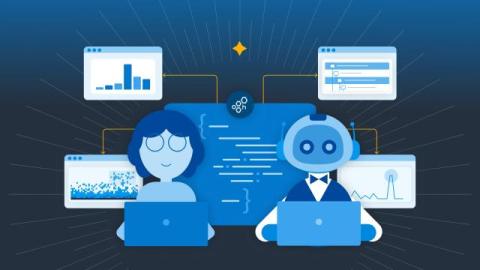
Engineers are constantly context switching between tools, adding cognitive overhead on top of already complex work. You're deep in an investigation, you need to analyze some data, pull up a runbook somewhere else, and share findings back in Slack. Context gets lost in the shuffle, correlating across data sources becomes painful, and everything just takes longer. In high-pressure situations like incidents, that friction has a real cost to the business.

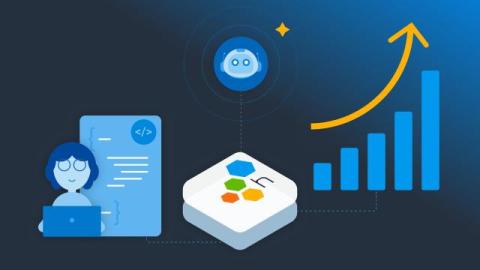
Honeycomb Metrics Is Now Generally Available

It’s Black Friday. Checkout latency is spiking. Your on-call engineer pulls up the dashboard and starts working through the list. Is it a regional issue? No, all regions look fine. A payment provider? Stripe, PayPal, Apple Pay all nominal. A bad deployment? Nothing shipped in the last six hours. All your infrastructure dashboards are showing green. But customers are complaining. Checkout is slow, carts are being abandoned and revenue is draining away.

Create a Custom Service Health Board With the Honeycomb MCP

Your software is sending data to Honeycomb. Now where is the dashboard you want? The best dashboard is one created just for your application, or your service, or your team. You can get that in minutes with the Honeycomb MCP. Open your coding agent in your IDE, or on the command line in your code repository. Configure the Honeycomb MCP and authenticate with Read and Write permissions. Now tell it what you want. You can be high-level: Make me a service health board for the frontend service.

Your Questions About AI-Assisted Development Answered

We recently hosted a webinar on AI-assisted development with DORA, and the audience had a lot of questions—far more than we could get to in an hour. I picked out six that get at the stuff people are wrestling with day to day. These aren't the easy questions, and I don't think there are necessarily easy answers, but I've spent the past year building and shipping with AI coding tools and observing (literally) what happens when that code hits production. Here's what I have.

Incident Report: Exercises, Cleanups, and Evacuations

Every year, Honeycomb runs disaster recovery scenarios in multiple environments, including in production. Although each of our instances runs in a single region, on at least three Availability Zones (AZs), we have multiple plans for partial regional failures, and particularly, zonal failures. One of these tests was run on December 5th, and after its successful completion came its cleanup steps.

Using Core Web Vitals in Honeycomb Frontend Telemetry

Google's Core Web Vitals (CWVs) measurements have been used by web administrators and SREs to review frontend application performance metrics, and have been factored into Google's page rankings since 2021. They are also used in Google Analytics, which crawls websites and evaluates performance metrics over a period of multiple days, and with various frontends (desktop web, mobile web, etc.) to establish how well a website performs in production.

The Next Era of Observability: Founders' Reflections - Additional Q&A

What happens when the people who helped define observability take a hard look at AI? That’s what Honeycomb co-founders Christine Yen (CEO) and Charity Majors (CTO) dug into during this webinar, starting with the early days of observability (back when it wasn’t even a category yet).

Teaching AI How to Refinery

At the beginning of February, we released v3.1 of Refinery, our advanced, tail-based sampling solution. The new version comes with more performance enhancements, bug fixes, and a few new pieces of telemetry. In tandem with the 3.1 release, we also released a new tool for our MCP server which helps your AIs understand Refinery, and how Honeycomb handles sampling.

Happy Birthday to Us: Honeycomb 10 Year Manifesto, Part 1

Christine and I started Honeycomb in 2016, which means it’s been ten years. Christine, a developer, and I, an operations engineer, were both profoundly unhappy with the state of the art in monitoring and logging tools. The tools we had used at Facebook didn’t spray our signals around to a bunch of siloed-off pillars. They consolidated as much context as possible so we could properly explore it, the way every other non-software engineering team already takes for granted.

How Honeycomb Supercharges OpenTelemetry for AI

It has become common knowledge that the nature of software development has changed as AI-code generation and agent-based features gain adoption. In perhaps a more subtle shift, the fundamentals of software instrumentation are changing too. As OpenTelemetry becomes the standard instrumentation layer across enterprises, with thousands of developers (many from Honeycomb) actively contributing to it, the nature of the telemetry data captured itself is evolving to meet the growing demand for rich context.