Operations | Monitoring | ITSM | DevOps | Cloud

Flows vs. packet captures for network visibility

Recently, I saw some discussion online about how flow data, like NetFlow and sFlow, doesn’t provide enough network visibility compared to doing full packet captures. The idea was that unless you’re doing full packet captures, you’re not doing visibility right. Because I’ve used packet captures so many times in my career, I admit there’s a part of me that wants to agree with this.

Anatomy of an OTT traffic surge: Thursday Night Football on Amazon Prime Video

This fall Amazon Prime Video became the exclusive broadcaster of the NFL’s Thursday Night Football. This move continued Prime Video’s push into the lucrative world of live sports broadcasting. While they had previously aired TNF, as it is known, this is the first season Amazon Prime Video has exclusive rights to broadcast these games. As you can imagine, airing these games has led to a surge in traffic for this OTT service.

What can be learned from recent BGP hijacks targeting cryptocurrency services

On August 17, 2022, an attacker was able to steal approximately $235,000 in cryptocurrency by employing a BGP hijack against the Celer Bridge, a service which allows users to convert between cryptocurrencies. In this blog post, I discuss this and previous infrastructure attacks against cryptocurrency services. While these episodes revolve around the theft of cryptocurrency, the underlying attacks hold lessons for securing the BGP routing of any organization that conducts business on the internet.

8 reasons why network observability is critical for DDoS detection and mitigation

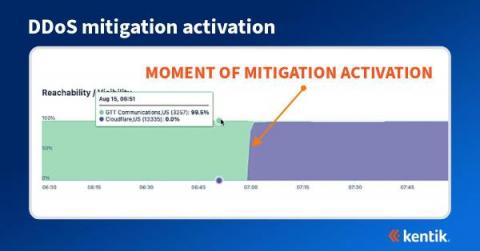
Distributed denial-of-service (DDoS) attacks have been a continuous threat since the advent of the commercial internet. The struggle between security experts and DDoS protection is an asymmetrical war where $30 attacks can jeopardize millions of dollars for companies in downtime and breaches of contract. They can also be a smokescreen for something worse, such as the infiltration of malware.

Managing the hidden costs of cloud networking - Part I

Technologies like virtualization and containerization have gained significant traction over the last decade as foundational tools for modern application development. As companies like Amazon (AWS), Microsoft (Azure), and Google (Google Cloud) started to invest in the hardware and software infrastructure required to support access to these virtualized resources, “the cloud” was born.

How much does RPKI ROV reduce the propagation of invalid routes?

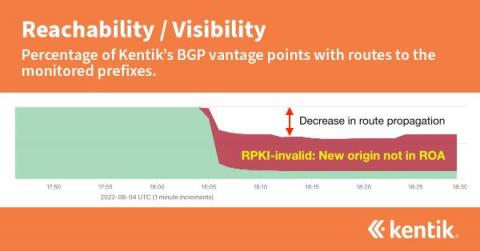
Earlier this year, Job Snijders and I published an analysis that estimated the proportion of internet traffic destined for BGP routes with ROAs. The conclusion was that the majority of internet traffic goes to routes covered by ROAs and are thus eligible for the protection that RPKI ROV offers. However, ROAs alone are useless if only a few networks are rejecting invalid routes.

Understanding AS relationships, outage analysis and more Network Operator Confidential gems

The objective of Network Operator Confidential is to share our global internet market insights from recent months. Kentik, and our customers, have access to views and analysis of global internet traffic that no one else can match. In our first Network Operator Confidential webinar, I was joined by Doug Madory, Kentik’s director of internet analysis, and Grant Kirkwood, founder and CTO at Unitas Global.

Bringing business context to network analytics

Kentik brings real-world business context to the telemetry we collect and the analytics we provide. That’s the overarching theme I got from Networking Field Day: Service Provider 2. As I watched and listened to each presentation, it was pretty obvious to me that Avi, Steve, Doug, and Nina, all technical powerhouses, were a little less focused on packets and a little more focused on how we can improve network operations and a service provider’s ability to make smart business decisions.