Operations | Monitoring | ITSM | DevOps | Cloud

Why Alert Fatigue Is Killing Your MTTR

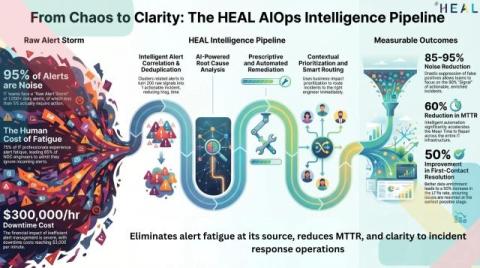
Every minute counts when production systems go down. Yet the average enterprise NOC team receives over 1,000 alerts per day, according to a 2025 study by OpsRamp. Of those, fewer than 5% require human intervention. The rest? They are noise — redundant, low-priority, or symptomatic signals that bury the genuine incidents demanding immediate attention.

What is HEAL Monitoring Tool? A Comprehensive Guide for IT Leaders

Your organization has invested heavily in monitoring tools for application performance, infrastructure monitoring tools for servers and databases, log monitoring tools, network monitoring tools, and third-party monitoring tools for specific services. But the actual problem is your IT team is drowning in that data. A single production issue generates 30+ alerts across applications, databases, servers, and monitoring tools, creating an alert flood that buries the actual problem.

AIOps Is Consolidating Fast, Here's Where HEAL Delivers Results

As of September 2025, the Artificial Intelligence for IT Operations (AIOps) market is a rapidly expanding and dynamic sector, projected to surpass $20 billion. The landscape is defined by a major consolidation trend, with large enterprise technology vendors acquiring key AIOps capabilities to integrate into their broader portfolios.

Silent Downtime: The Hidden Cost of Delayed Awareness in Banking

Ask banking leaders if their systems are healthy, and most respond confidently: “Yes, everything’s up.” But track a transaction closely, and reality shifts. A high-value payment retries repeatedly before settling. A KYC process silently times out, losing a verified customer. Compliance checks complete using stale data. No visible outages. Yet silent failures accumulate, becoming costly and increasingly damaging. This is downtime that dashboards never flag.

Why Clarity Demands More Than Dashboards

Despite years of investment in observability stacks and AI dashboards, most IT organizations still struggle with one uncomfortable truth: they can’t identify root cause in real time, and they can’t explain how technical failures impact the business. Not in dollars. Not in user flows. Not in boardroom language. What’s worse, they often don’t realize what they’re missing.